Archives 2025

Le indagini presso il Museo Criminologico di Roma dove lo scheletro oggi è conservato – STUDY CENTER for LEGALITY SECURITY and JUSTICE

Il luogo dove ritenevamo di poter trovare degli altri indizi per la soluzione del nostro “giallo” era ovviamente il luogo dove lo scheletro della Dama Bianca è conservato dal 1934. La prima sede dell’attuale Museo Criminologico venne inaugurata il 19 novembre 1931 e trovò spazio presso la vecchia prigione seicentesca delle Carceri Nuove di via Giulia, fatta costruire da Papa Innocenzo X. Nel 1968 il Museo Criminale venne dismesso poiché i locali vennero convertiti ad altro uso, cosicché i reperti furono riposti temporaneamente presso il deposito del carcere romano di “Regina Coeli”. La sede più recente, riaperta nel 1975, con la dizione più scientifica di “Criminologico”, trovò collocazione nel Palazzo del Gonfalone risalente al 1827, fatto costruire da Papa Leone XII per destinarlo a casa di correzione per minorenni. Lentamente abbandonato sino alla chiusura, nel 1994 venne riaperto quale museo storico, sempre comunque dipendente dal Ministero di Grazia e Giustizia, contenente strumenti di supplizi in uso sino al primo Novecento. Come si legge sul sito ufficiale dedicato

«… Il Museo Criminologico nasceva nel 1930 e con esso l’Amministrazione penitenziaria realizzava un progetto che già negli ultimi decenni dell’Ottocento era considerato un utile supporto per lo studio del sistema penale e penitenziario, oltre che strumento scientifico per la formazione di funzionari e magistrati e di divulgazione al tempo stesso. Per alcuni decenni il Museo Criminologico ricevette grandi apprezzamenti anche all’estero grazie alla ricchezza del patrimonio storico e scientifico che custodiva; le vicende storiche successive lo costrinsero ad un graduale ridimensionamento fino alla chiusura che avvenne nel 1968. Nel 1991 fu avviato il progetto di ristrutturazione completato nel 1994 …»

Il museo nel corso degli anni ha acquisito una certa notorietà, anche internazionale, attirando visitatori provenienti da diverse parti del mondo e raccogliendo ottime recensioni. Nel 2016 però è stato chiuso, sembrerebbe definitivamente, poiché a detta dei responsabili della struttura i locali che lo ospitano in via del Gonfalone, sarebbero destinati ad uffici di alti funzionari del Ministero della Giustizia che ambirebbero alla posizione centralissima e prestigiosa dello stabile ottocentesco.

Il sopralluogo al Museo

Nel 2019 gli autori del presente saggio, dopo una strenua lotta contro la burocrazia, vinta grazie all’italico ingegno, hanno effettuato un sopralluogo al museo criminologico e hanno potuto osservare (informalmente) da vicino lo scheletro della Dama Bianca e il suo allestimento. La didascalia del pannello che illustra la cella con lo scheletro di Poggio Catino, protetto da una lastra di vetro, nella sua ultima formulazione, così riporta, (anche in inglese):

«L’identità dello “scheletro di Poggio Catino” è quanto mai incerta. L’unica notizia storicamente documentabile è che lo scheletro fu rinvenuto nel 1933, a Poggio Catino, paese in provincia di Rieti, all’interno di un torrione crollato di un palazzo baronale. La scoperta fu fatta da Vincenzo Biraghi, la cui famiglia fu per molti anni proprietaria del palazzo. Molti studiosi cercarono di ricostruire l’identità e la storia dello scheletro, attingendo da documenti d’archivio e leggende popolari. Fu cosi accertato che si trattava dello scheletro di una donna, di circa trent’anni, vissuta nel XVI secolo. Le cronache riportarono diverse versioni, mai peraltro riscontrate da dati certi. Biraghi, che aveva assistito al ritrovamento, raccontava che lo scheletro era stato rinvenuto in una cella, sotto le macerie del mastio, steso a terra con le braccia intorno alle gambe ripiegate, con ceppi ai polsi e alle caviglie. Tra le leggende fiorite intorno alla donna, alcuni scrissero che ella stata presa in ostaggio dagli Orsini che nel XVI secolo avevano espugnato la fortezza. Altri optarono per una storia romantica, attribuendo alla donna il ruolo di castellana e compagna del potente Geppo Colonna, signore di Poggio Catino. Innamoratasi, ricambiata, del castellano di Poggio Catino, per vendetta il Colonna l’aveva fatta rinchiudere nella cella sotterranea e fatta morire d’inedia. Quale sia la vera storia, nessuno può dirlo, resta il fatto che alla donna sconosciuta fu riservata una morte davvero terribile. Provenienza: Poggio Catino, Famiglia Biraghi, 1934».

Tale descrizione, che collima con quella riportata anche nel sito internet ufficiale del Comune di Poggio Catino, è sempre la stessa anche all’interno della pubblicazione “Museo Criminologico” a cura di A. Borzacchiello, 2003, quest’ultima allora responsabile scientifico del Museo. Ancora più sfuggenti le notizie sullo scheletro che compaiono in “Guida al Museo Criminologico di Roma”, Roma, 1975, sebbene offrano interessanti spunti di riflessione: «Sulla destra, prima di entrare, è stato ricostruito, un vano dove fu trovato lo scheletro di una donna murata viva, non identificata, con ceppi di ferro ai polsi e ai piedi ».

Considerazioni sull’allestimento museale.

Secondo le versioni letterarie che ricordano il rinvenimento ed il successivo trattamento, lo scheletro fu rimosso unitamente a tutta la compagine strutturale in cui lo stesso giaceva: pare una misura un po’ estrema che viene eseguita molto raramente e, di solo, per contesti archeologici di ben maggior portata. Tuttavia, D’Amelia, riferisce senza indugio, che «venne da Roma un’ispezione inviata dal Ministero di Grazia e Giustizia che ordinò la rimozione o meglio l’asporto radicale di quanto rinvenuto con le quattro pareti della cella, lavoro eseguito da abili esperti in materia. E tutto venne caricato e trasportato a Roma nel museo».

Sulla rete Internet si trovano varie foto dell’esposizione dello scheletro, una compare anche nel precitato catalogo del Museo del 2003 ma nel catalogo del 1975 della Dama Bianca non vi è traccia, né descrizione né foto: curioso particolare!

Abbiamo scelto immagini che, pur diverse tra loro, riconducono a due fasi distinte dell’allestimento della cella e dell’installazione dello scheletro. L’angolazione delle due foto è differente e pur rimanendo inalterata la descrizione del reperto sopra eseguita si notano, tuttavia, alcune divergenze. Ve le proponiamo con una descrizione delle varie differenze riscontrate:

Foto A) il muro di fondo della nicchia quadrangolare è costituito da grosse bozze di pietra chiara, travertino o calcare, ed una finestra cieca, con cornice, quadrangolare dotata di inferriata a maglia quadrata. I blocchi di pietra sono di forma cubica, ben commessi l’uno sugli altri. Dalla cornice della finestra pende una piccola lanterna ad olio con lungo “appendaglio”.

Lo scheletro è posto sopra un blocco cubico di colore ben più scuro di quelli visibili sulla parete di fondo ed in cui è infisso un grosso anello circolare. Le gambe sono stese e le mani poggiate sul bacino sono costrette da vincoli di metallo. Il busto lievemente reclinato così come la testa. Una brocca sbeccata giace sul pavimento alla sinistra del cubo di pietra che funge da sedile. Di questa, la citata letteratura non fa menzione alcuna.

Foto B) Il reperto, in posizione assisa, mostra il busto quasi eretto e frontale appoggiato all’angolo tra la parete di fondo ed il fianco della nicchia. Dalla cornice della finestra è stata rimossa la lanterna (essa è comunque – oggi – presente nell’allestimento, appesa alla parete sinistra della nicchia). Lo scheletro è seduto, gli arti in vincoli ma la testa, non più riversa, è in asse con il busto. La brocca giace sul pavimento alla destra del sedile e dello scheletro quasi in linea con il centro della soprastante finestra. Una eventuale considerazione viene in risalto dall’esame di altre foto presenti in rete; pur eseguite con la presenza di un vetro protettivo che nelle predette immagini non compariva, mostrano, in modo più definito, un curioso particolare già presente nell’immagine in cui compariva anche la lanterna appesa alla finestra. Precisamente, un foro quadrangolare presente nella muratura di fondo, sulla sinistra dell’immagine, lascia intravedere lo spessore della detta muratura che, sorprendentemente, pare di pochi centimetri, quasi si trattasse di un pannello decorato con i blocchi di pietra, di colore più chiaro rispetto al blocco usato come sedile. Del resto anche lo stipite della nicchia conforta questo tipo di osservazione.

Del resto, come si vedrà, la stessa scheda del museo che contempla la descrizione del reperto annota la presenza di uno scheletro posto entro un “cella riprodotta” o comunque di uno “scheletro conservato in una cella (ricostruzione)”, dato ben diverso da quello fornito dalla versione del D’Amelia per cui «[…] venne da Roma un’ispezione inviata dal Ministero di Grazia e Giustizia che ordinò la rimozione o meglio l’asporto radicale di quanto rinvenuto con le quattro pareti della cella, lavoro eseguito da abili esperti in materia. E tutto venne caricato e trasportato a Roma nel museo suddetto.».

Osservazione ed analisi dello scheletro

L’esame ravvicinato, seppur attraverso la lastra di vetro di protezione, ha permesso di constatare che le ossa sono congiunte a mezzo di filo metallico (anche in ottone) e la postura, apparentemente diversa da quanto emerge dalle notizie sopra analizzate, è mantenuta stabile mediante lamelle metalliche.

Un perno in metallo passante sotto il processo temporale (sotto il tubercolo articolare) e posto a contrasto tra l’osso temporale e la mandibola, mantiene quest’ultima in posizione serrata.

Lo sterno ed alcune parti cartilaginee della cassa toracica appaiono restituiti in cera o materiale plastico (colore giallastro).

Del pari, anche il colore delle ossa tendente al bianco ambrato per evidente perdita di sostanza organica per probabile esposizione ad ambienti secchi ed asciutti, quale la lunga esposizione in musei, ovvero in ambienti (o giaciture) basici in cui la base elimina la sostanza organica quali depositi rocciosi ad esempio connotati dalla presenza di carbonato di calcio che è il maggiore componente del calcare (contesti non infrequenti, appunto, nella Sabina) o della calce per le opere murarie. Sebbene la valutazione della colorazione non sia un indice univoco di valutazione diventa al contrario interessante il particolare per cui le ossa rinvenute a contatto con elementi metallici riportano le tracce e i segni delle ossidazioni: verdastre per rame o bronzo, brune per il ferro; le caviglie e polsi dello scheletro appaiono prive di tracce alcune che, verosimilmente, si sarebbero, al contrario, prodotte a seguito di una prolungata esposizione e contatto con il metallo dei vincoli. Ad ogni buon conto una delle prime attività di analisi che l’equipe aveva intenzione di svolgere era, logicamente, quella di effettuare una attenta ricognizione presso il museo criminologico di Roma, sia per acquisire documentazione relativa al reperto che per osservarlo attentamente da vicino e poi, al limite, effettuare dei prelievi di materiale osseo dello scheletro per effettuare una datazione precisa. Per tale motivo, uno dei due autori del presente saggio, Marco Strano, ha preso contatto con il Museo riuscendo a parlare telefonicamente (non senza difficoltà) nel settembre 2018 con uno dei responsabili, il dott. Luca Morgante, spiegando di voler effettuare una visita informale allo scheletro. Il funzionario, inizialmente prospettò “insormontabili difficoltà burocratiche” ma alla fine accettò di ricevere uno degli autori del presente saggio, Simone De Fraja, accompagnandolo personalmente con formale gentilezza e disponibilità nel museo e permettendogli la visione (senza però poter estrarre copie e scattare fotografie) del fascicolo relativo all’istallazione museale della Dama Bianca.

Per la precisione venne chiesto non solo di ispezionare lo scheletro ed il suo allestimento ma di visionare i documenti relativi all’acquisizione del materiale, ogni documento che illustrasse come, quando e perché fosse avvenuto quell’accessione.

Ci si aspettava di trovare una sorta di documento di consegna, di relazione sul ritrovamento ed il trasporto, magari qualche disegno od anche una foto. Il fascicolo presente nell’archivio del museo, in realtà è alquanto scarno, e contenente un verbale di presa in carico “…di uno scheletro proveniente da Poggio Catino…”; la cartella, almeno quella esibita, conteneva solamente due o tre foto dell’ambiente (non in cui venne rinvenuto lo scheletro ma di quello in cui fu allestito), alcune pagine di un dattiloscritto probabilmente ottenuto mediante carta–carbone o copiativa (macchina da scrivere, carta leggera e fuori formato standard). Il testo, una sorta di racconto/novella dai forti connotati fantastici ed ancora contrassegnato da ampie licenze letterarie, narra (anche a mezzo di discorsi diretti e dialoghi) la storia appassionata della donna [si sostiene fosse stata bellissima!] finita in catene a seguito di intrecci d’amore tra il signore di Poggio Catino e tal Geppo Colonna.

Tale romantica narrazione ha evidentemente ispirato ed alimentato tutta la letteratura ben più recente e, verosimilmente, influenzato poi anche il testo del D’Amelia. Ciò che preme evidenziare è che il dattiloscritto è a firma di Bartolomeo Rossetti, penna ben nota della tradizione popolare del Lazio; Rossetti si è spento nell’anno 2000. Nel corso della breve visita consentita a Simone De Fraja nei locali del museo è stato possibile comunque avvicinarsi all’installazione contenente lo scheletro con divieto di fotografia, nonostante il web contenga numerose foto della celletta e dei resti scheletrici sostanzialmente integri e senza perdite: insomma secondo “la versione ufficiale” venne rinvenuto a Poggio Catino e trasportato a Roma uno scheletro integro in ogni sua parte.

Davvero un colpo fortunato per Biraghi e per il neo museo criminologico all’epoca scarno di reperti. In realtà, l’esposizione della Dama Bianca, comprende anche una brocca frammentaria di cui, tuttavia, non si dà notizia nemmeno nella descrizione, anch’essa laconica e del solito tenore, che affianca lo scheletro; c’è quindi da dubitare si tratti di solo arredo suggestivo. Nello stesso pannello informativo, privo di alcuna nozione scientifica, si è tenuto comunque a precisare: “Provenienza: Poggio Catino, Famiglia Biraghi, 1934”.

La donazione dello scheletro al museo pare dunque riferibile all’anno seguente l’asserito rinvenimento. L’ispezione – seppur sommaria – della cella contenente lo scheletro, ha permesso di ottenere informazioni più concrete in merito alle vicende del ritrovamento dello scheletro anche ai fini di un miglior tentativo di identificazione e comprensione delle volumetrie della rocca di Poggio Catino e dei corpi di fabbrica, del contesto del ritrovamento (ambienti e materiali edili), sulla scorta delle indicazioni della letteratura sopra analizzata. Le informazioni ricavabili da tale consultazione sono comunque esigue. La scarna descrizione del reperto in mostra nel suo allestimento riporta esattamente che la cella è “riprodotta”, così come appare allo stato attuale.

L’esame della struttura, confermando quanto sopra ipotizzato, ha quindi rivelato che la cella in cui siede lo scheletro non è composta dai materiali reperiti sul posto a seguito di “un crollo di un torrione” ma è una semplice “cabina” in cartongesso o legno stuccato in cui sono riprodotti, scenicamente, i paramenti murari in blocchi mentre la griglia della finestra sembra oggettivamente in metallo. Si tratta dunque, sostanzialmente, di una riproduzione o ricostruzione scenica, così come onestamente affermato dalla scheda, di una verosimile condizione di prigionia allestita all’interno di un piccolo ambiente decorato e ricavato, mediante pannellatura.

Berita Terkini

Berita Terbaru

Daftar Terbaru

News

Berita Terbaru

Flash News

RuangJP

Pemilu

Berita Terkini

Prediksi Bola

Technology

Otomotif

Berita Terbaru

Teknologi

Berita terkini

Berita Pemilu

Berita Teknologi

Hiburan

master Slote

Berita Terkini

Pendidikan

Resep

Cek Ongkir Cargo

Togel Deposit Pulsa

Daftar Judi Slot Online Terpercaya

Slot yang lagi gacor
Il Castello di Poggio Catino e lo studio della presunta scena del crimine – STUDY CENTER for LEGALITY SECURITY and JUSTICE

La presunta “scena del crimine” vale a dire il luogo dove sarebbe stato ritrovato lo scheletro, è situata all’interno del castello di Poggio Catino e più precisamente nella parte più alta della rocca. Ci è apparso quindi necessario effettuare preliminarmente uno studio accurato del castello di Poggio Catino, delle sue origini e del suo sviluppo architettonico. Podium de Catini (Poggio Catino) secondo diverse fonti storiche nacque a seguito di un’operazione di incastellamento di un insediamento sparso situato vicino al “Castrum di Catino”  voluta dall’Abbazia di Farfa per rendere più efficiente il proprio sistema difensivo e per accogliere una popolazione più consistente non avendo Catino la possibilità di un ampliamento urbanistico vista la difficile orografia del suo posizionamento (dinamica su cui, come anzidetto in un capitolo precedente, gli autori del presente saggio non concordano appieno). Notizie storiche circa la sua nascita sono riportate nel Regesto Farfense (IV – Doc. 809–An. 1047 – 1089, pag. 211) e nel Chronicon Farfense (II – pag. 122) di Gregorio da Catino. Fra i beni che l’Abbazia acquista esiste anche il “‘Podium” e su questo colle Bernardo I costruì il nuovo Castello verosimilmente nel decennio 1070 – 1080.

Nel libro di G. Marocco, Monumenti dello Stato Pontificio e relazione topografica, edito a Roma, nel 1833 (Tomo Il, ad vocem Poggio Catino, pp. 19–20) troviamo la seguente descrizione (riportata integralmente con quelli che potrebbero sembrare ora degli errori ortografici ma che sono legati alla scrittura antica):

«…Questo luogo dona il titolo di Marchesato all’ illustre famiglia Olgiate, titolo stabilito da Clemente VILI li 13 agosto 1596 a favore dÉ signori di esso castello con assoluta autorità e dominio” L’arcipretura e chiesa parrocchiale dedicata a San Nicola di Bari è«posta da un lato del palazzo baronale Olgiate, abbastanza vasto, poiché vi sono quattro appartamenti l’uno dall’altro ordinatamente divisi, cui è contiguo un vago giardino. Le strade interne sono un poco scoscese, ma il breve tratto di quella del sunominato Borgo è piana, e molto decente. L’unione del fabricato di tutto il castello forma il suo muro di circonferenza, e reca nel suo totale la figura di un cembalo, avente però quattro torrioni all’intorno, come dietro la chiesa parrocchiale osservansi le vestigia di un “antico fortino”…».

In pratica tutto l’abitato del centro storico di Poggio Catino avrebbe in passato costituito “il castello”. Da questa sommaria descrizione, risalente alla prima metà dell’Ottocento, si comprende infatti che l’abitato è delimitato da una cinta muraria in alcuni tratti costituita anche dalle mura delle abitazioni, che ricorda la forma di un cembalo, strumento musicale vicino per forma e meccanica al pianoforte.

Il perimetro di questa cinta è segnato da quattro torri benché le indagini svolte permettano l’individuazione di cinque torri (a sezione circolare) e strutture salienti, anche per gli accessi, secondo spezzate ed avanzate. Da notare come la più antica rocca, posta sulla sommità del rilievo, lambita e collegata alle mura, più tarde, sia interpretata dal Marocco come “antico fortino”, con espressione sette–ottocentesca. Sul testo V. Stazi Fabrizi, Mille anni di storia di Catino e Poggio Catino, stampato nell’anno 2002, ed edito a cura dell’Associazione culturale “Oltre il Ponticello” unitamente alla Pro Loco di Poggio Catino ha riguardato, scrive Raffele Ricci, la trascrizione dell’opera di V. Stazi Fabrizi (Catino 1864 – Poggio Mirteto 1935); Silvano Soavi, inoltre, «ha curato la pulizia delle tavole e ridato colore agli stemmi, così come ricorda di averli visti nell’originale dell’opera mai finito».

Ed infatti, ai fini dell’indagine, il contributo più importante di questa stampa è proprio la tavola che propone una veduta naif di Poggio Catino preso da ovest nonché una planimetria dell’abitato entrambe corredate da didascalie nonché dalla dizione “Poggio Catino, prospetto e pianta verso l’anno 1500”.

Non è del resto indicato da quale documentazione V. Stazi Fabrizi tragga questi elementi che del resto appaiono abbastanza verosimili e in buona parte confermati dalle tracce materiali oggi esistenti e verificate mediante ispezione in loco. Tale contributo sì è rivelato importante per la individuazione del tracciato delle mura e della “rocca”, seppur ristrutturata, evidentemente precedente alle mura stesse.

Interessante notare l’autonomia del fabbricato della “rocca” rispetto all’entità “castello”: con quest’ultimo termine, infatti, con una terminologia più tarda rispetto a quella pienamente medioevale, viene chiaramente indicato tutto il borgo fortificato e la tavola, alla lettera H, individua le “mura forse doppie dette La Scarpa che circondano tutto il castello”. La parola “castello” può riferirsi ad una ampia varietà di strutture, dall’antichità al secolo XVII; assume significati che variano sia in relazione al contesto geografico sia in relazione al contesto cronologico documentale in cui la stessa è impiegata, sia in relazione alla permanenza o trasformazione linguistica in una data compagine culturale. Già prima della evoluzione architettonica moderna, “castello” diviene pertanto e soprattutto se circondato da mura, l’abitato fortificato nel suo complesso all’intimo del quale persiste, evoluta nelle forme od abbandonata, la primitiva fortificazione difensiva, pienamente medioevale.

Frequentemente nel tardo medioevo, persistendo nei secoli seguenti, “castello” è un gruppo di edifici strettamente connesso alla fortificazione preesistente, un gruppo di case arroccato su uno sperone roccioso le cui mura esterne fungono da cinta fortificata. L’antica fortificazione in cui potevano essere esercitati i poteri feudali si distingue dal più tardo abitato fortificato – generalmente non urbano – in cui possono trovarsi edifici palaziali; essa spesso è denominata “rocca” (od anche “cassero” in Toscana) e funge da ultimo ricetto militare o da residenza qualora ne siano stati modificati i caratteri. Dalla “rocca”, se non direttamente dalla fortificazione più antica, in molte aree geografiche si giunge a strutture fortificate ed alla fortezza alla moderna, tecnicamente e balisticamente molto più evoluta nonché in corsa con l’evoluzione delle tecniche ossidionali.

Sulla scorta di quanto analizzato, come in altre realtà, a Poggio Catino si possono distinguere alcuni poli di interesse: almeno dalla metà del Cinquecento si distinguono la rocca, l’ampio palazzo baronale, l’annesso giardino alla italiana, le mura costituite anche dalle stesse abitazioni che seguono i dislivelli e terrazzamenti naturali, alcune torri e sicuramente strutture d’accesso salienti o turrite.

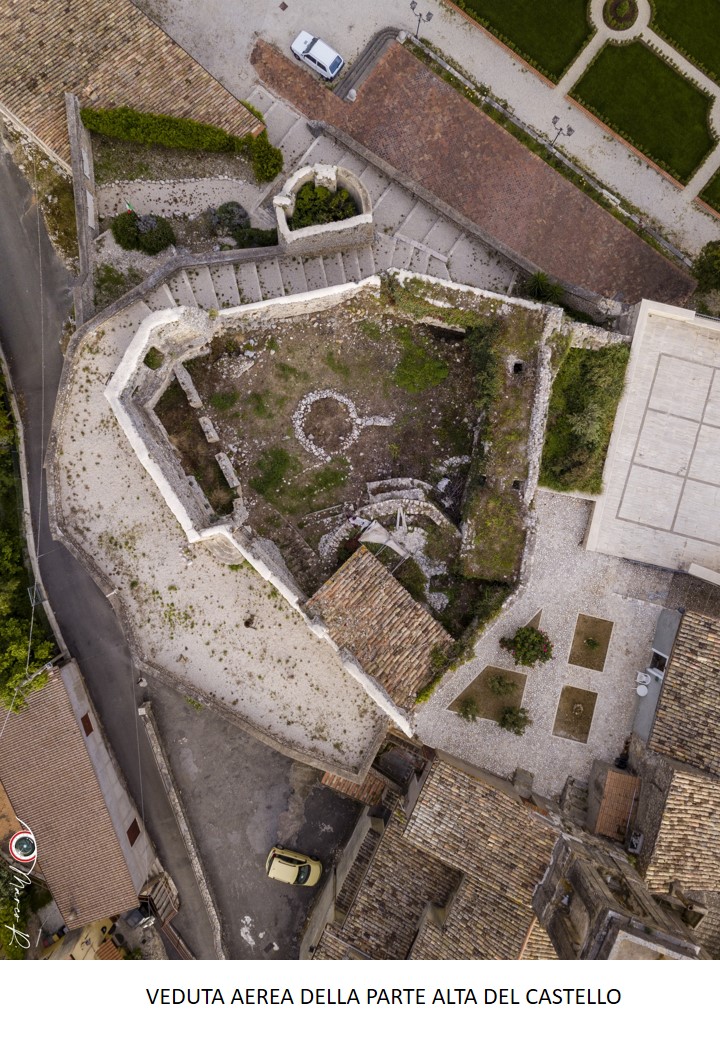
Il castello di Poggio Catino è comunque una struttura abbastanza complessa che nel corso dei secoli ha subito numerose modifiche e ampliamenti. La parte più alta, completamente scoperta (chiamata “la rocca”), sarebbe il luogo di ritrovamento dello scheletro.

In particolare, il punto di ritrovamento dello scheletro della Dama sarebbe stato a ridosso di uno dei muri di cinta. Il castello attualmente versa in condizioni vergognose e purtroppo non dissimili da molte altre fortificazioni, non solo ruderi, di cui è cosparso il Bel Paese. Con gli agenti atmosferici e con il semplice passare del tempo le mura e le altre strutture interne si stanno sgretolando. Una quindicina di anni fa fu pietosamente depositato un sottile strato di calcestruzzo sulla parte superiore delle mura per cercare di ridurre la caduta inesorabile delle pietre e lo sfaldamento dei muri. Ma per il resto questa meravigliosa fortificazione viene da anni lasciata al suo destino. Basterebbero poche decine di migliaia di euro per metterla in sicurezza e per combattere efficacemente l’opera distruttiva del tempo ma questa importante esigenza di tutela delle nostre radici storiche non viene evidentemente compresa o considerata necessaria dalle istituzioni.

In alcuni luoghi europei, come in Germania Francia o Inghilterra, alcuni ruderi assai meno appariscenti e prestigiosi del castello di Poggio Catino vengono tenuti con religiosa cura e vengono visitati da migliaia di persone ogni anno che, tra l’altro, portano introiti economici rilevanti ai paesi che li ospitano. E questa è esperienza comune. A titolo esemplificativo, il castello di Tintagel in Gran Bretagna, che la leggenda colloca come la famosa “Camelot” della saga di re Artù e dei cavalieri della tavola rotonda, è costituito in realtà da pochi ruderi e da qualche muretto in pietra. Il castello di Tintagel è stato visitato anni fa dagli autori del presente saggio con una conseguente forte delusione. Nulla a che vedere con il castello di Poggio Catino che possiede strutture più imponenti e che ha molto più fascino. Perché allora lasciare lentamente morire una testimonianza storica così affascinante che potrebbe portare lustro e indotto economico (turistico)? Perché ogni anno il castello di Tintagel viene visitato da migliaia di appassionati turisti che spendono i loro soldi nelle decine di negozi di souvenirs, che mangiano e bevono nei tanti locali ispirati ai cavalieri di re Artù e che quindi “mantengono” quasi tutta la popolazione della cittadina, mentre il castello di Poggio Catino è conosciuto praticamente solo dagli abitanti del paese e da una ristretta cerchia di studiosi di storia medievale?  Ma torniamo al castello di Poggio Catino.

Alcuni crimini, forse, possono esservi avvenuti, evidentemente e forse gravi rispetto all’uccisione di una donna ma non per questo non in grado di provocare sdegno negli uomini di buona volontà. Intorno agli Anni Settanta del Novecento, ad esempio, la proprietà del castello e dell’annesso palazzo nobiliare era stata acquisita da una ricca attrice francese, tal Yvonne Fourneaux che fece effettuare diversi lavori di ristrutturazione e in seguito la proprietà del castello passò a una ricca americana, che all’interno del bastione centrale ha fatto costruire con disinvoltura una orribile costruzione abusiva in tufo, addossata e cementata al muro medievale e che contiene dei cassoni per l’acqua in eternit (attualmente in disuso).

In seguito, intorno agli Anni Ottanta, uno degli ex sindaci del paese, Emeraldo De Felice, per realizzare delle case popolari con struttura in cemento armato da concedere presumibilmente ad alcune famiglie del luogo, ha fatto abbattere una parte annessa al castello di epoca medievale che conteneva antichi locali destinati forse a carcere e ad altri servizi dell’epoca. Gli anziani del paese raccontano che in tali locali demoliti ci fossero addirittura iscrizioni e graffiti di epoca medievale. Il progetto di realizzare case popolari venne in seguito bloccato e la costruzione moderna (addossata al lato sud del castello) ospita ora il centro congressi “la Dama Bianca”, uno stridente locale moderno scarsamente utilizzato destinato ad incontri e conferenze.

Auspichiamo che le prossime generazioni di amministratori pubblici possano tentare di salvare e di valorizzare ciò che rimarrà dell’inestimabile patrimonio che la storia italiana ci ha lasciato e che sovente viene lasciato deteriorarsi.

Berita Terkini

Berita Terbaru

Daftar Terbaru

News

Berita Terbaru

Flash News

RuangJP

Pemilu

Berita Terkini

Prediksi Bola

Technology

Otomotif

Berita Terbaru

Teknologi

Berita terkini

Berita Pemilu

Berita Teknologi

Hiburan

master Slote

Berita Terkini

Pendidikan

Resep

Cek Ongkir Cargo

Togel Deposit Pulsa

Daftar Judi Slot Online Terpercaya

Slot yang lagi gacor

Indagini e perizie svolte sula scena del crimine, sullo scheletro e sulla cella che lo contiene. – STUDY CENTER for LEGALITY SECURITY and JUSTICE

Tutta la storia, dunque, stava assumendo dei contorni sempre più sfumati e sempre meno solidi man mano che discutevamo del problema, delle piccole conquiste documentali, degli ostruzionismi che andavamo incontrando o dei sospetti sulla genuinità di tutta quanta l’architettura. Da Biraghi reticente allo scheletro che doveva essere per forza di una donna assassinata per gelosia e dunque bellissima! Un po’ troppo… Decidemmo dunque di proseguire, coinvolgendo anche altri soggetti qualificati che potessero offrirci il proprio contributo per cercare di svolgere una analisi “scientificamente supportata” sull’allestimento della Dama Bianca presente nel Museo Criminologico di Roma a partire dal 1934.

Sopralluogo e analisi del sito del presunto ritrovamento dello scheletro.

L’analisi accurata della presunta “scena del crimine”, ovvero del punto in cui secondo la leggenda sarebbe stato ritrovato lo scheletro è stata condotta nel 2019 da Simone De Fraja. Secondo le affermazioni e le indicazioni di Sergio Biraghi lo scheletro venne trovato nell’area interna della fortificazione, l’area adiacente al prospetto murario rivolto a nord ed all’angolo formato da segmenti murari spezzati in prossimità del saliente che oggi affianca il posticcio accesso al recinto. Biraghi, ed ormai la leggenda, narra che i resti vennero rinvenuti in seguito ad un crollo (si dice di “un torrione”). In quest’angolo di cinta non dovevano essere presenti torri o torrioni, come la struttura ormai semicilindrica esistente poco più ad est.

Questa sezione muraria è forse la migliore conservata sia per elevato che per qualità della tessitura muraria, apparentemente tutta originale e coerente con altri parti del recinto, salvo modesti interventi; inoltre questa porzione mostra in più zone la presenza di un intonaco degradatosi in modo omogeno quindi, sostanzialmente, rimasto complessivamente esposto agli agenti nello stesso periodo di tempo. Non si evidenziano parti relativi a crolli od esposizioni relativamente recenti o comunque sezioni murarie dalla differente conservazione. La parte bassa di quest’angolo della cinta mostra tracce di suddivisione in livelli e l’attuale piano di calpestio appare evidentemente rialzato. Apparentemente posticci risultano i setti divisori oggi in essere (differente muratura, pezzatura e utilizzo casuale del laterizio).

É tuttavia plausibile ipotizzare, in quest’angolo della cinta, l’esistenza di un edificio, una struttura abitativa, a pianta quadrangolare, una parete della quale (quella rivolta a nord) era costituita dallo spesso muro di cinta.

Rimane da spiegare, secondo la tesi del Biraghi, allora cosa fosse qui crollato negli Anni Quaranta, se una torre od un grande edificio abitativo, e come si sia potuto smaltire l’eventuale notevole accumulo di macerie atteso che tutto quanto sembra rimasto fermo da lungo tempo. Appare evidente che il modesto ricetto ricavato in quest’angolo di cinta, nelle forme attuali, sia stato ottenuto in un secondo tempo, e per scopi differenti. Che l’individuo, donna o uomo, sia stato imprigionato, con i ferri costrittivi e fatto morire di stenti (questo narra la leggenda), qualunque ne sia stato il motivo (lasciamo stare gli intrighi amorosi), e successivamente murato vivo per continuare il supplizio o la condanna (come potrebbe suggerire l’esistenza di un contenitore in terracotta per l’acqua e prolungare l’agonia) appare alquanto improbabile. Parrebbe semmai più probabile che lo stesso possa essere stato obliterato nella muratura (si sarebbe dovuto ricavare una nicchia in spessor di muro) una volta deceduto: ma a questo punto apparirebbero superflui i ferri di contenzione che, comunque, non appaiono adeguati allo scopo e non sembrano nemmeno coevi all’epoca in cui si è voluto contestualizzare la leggenda. Già, infatti, la leggenda è posta in un generico XVI secolo, più o meno, sembrerebbe dal sol fatto di aver trovato della ceramica datante. Ma anche sulle sorti di tali reperti non vi è traccia (ad esempio una relazione del rinvenimento e nemmeno nel documento di acquisizione del museo), se non scenica, nell’allestimento museale corredato, vieppiù, di una lucerna in metallo. Di questi reperti di corredo, anche la leggenda, nelle forme più genuine, non parla mai.

Non vi è altrettanta traccia negli Statuti del tempo o nella prassi di giustizia criminale, salvo imponderabili episodi creativi, che qualcuno potesse essere giustiziato e condannato a simile sorte; a meno che non si trattasse di un omicidio il cui corpo doveva essere fatto scomparire in breve tempo e non già il frutto di una sentenza espressione di un giudizio secondo legge. Corpi murati ne sono stati trovati occultati all’interno di pareti, ridotti al minimo ingombro, a volte con la calce direttamente a contatto con i tessuti che si sono conservati (e verosimilmente non avevano i ferri agli arti, una lucerna e una brocca per l’acqua). Soprattutto la calce e l’isolamento anaerobico avrebbero restituito un corpo in condizioni conservative ben diverse. Qualora non fossero state trovati gli oggetti di corredo (scenico), qualora le misure di contenimento fossero state adeguate, a prima vista il ritrovamento sarebbe potuto apparire come una capsula del tempo relativa ad una “prigionia dimenticata” e non ad una condanna con tutto il resto degli orpelli, come richiede la leggenda.

Analisi dei ceppi ai polsi e alle caviglie dello scheletro

Studiando il materiale disponibile in Internet, Simone De Fraja reperì una pubblicazione fondamentale in materia di collezionismo strumenti di contenimento. Contattò l’autore per esporgli la questione della Dama Bianca. J.M. Robin è uno studioso francese, esperto e collezionista, autore di “Entraves, Fers & Menottes”, opera in quattro volumi corredata oltre mille foto di pezzi storici anche appartenenti alla propria collezione. Per nulla sorpreso ed anzi incuriosito dalla richiesta Robin rispose nel giro di qualche giorno:

«J’ai vu les photos, mais il y a pour moi des incohérences. Le squelette a les mains placées dans des menottes beaucoup trop grande ! Ce sont des bilboes ou ceps qui étaient normalement destinés à être placés aux chevilles du prisonnier. Cette pièce ne comporte pas de serrure. Les chevilles sont placées dans des entraves équipées d’une serrure à pêne avec ressort(s) en paillette et clé poussoir. […] Ce moyen de contention est apparu au XVIe siècle et à été utilisé jusqu’au XVIIIe. Mais cette pièce était conssue pour les chevilles des prisonniers et non pas pour les poignets! De plus, la teinte de ces pièces me semble avoir été repeintes en noir, ce n’est pas la couleur d’origine du fer. (voir photos jointes). Il est clair que les poignets pouvaient facilement sortir du bilboes. Je pense qu’il s’agit ici d’une mise en scène pour décor d’une cellule d’époque». (traduzione): «Ho visto le foto, ma ci sono incoerenze per me. Lo scheletro ha le mani entro manette troppo grandi! Questi sono vincoli o ceppi che erano normalmente destinati a essere collocati alle caviglie del prigioniero. Questo strumento non ha una serratura. I tasselli sono posizionati in catene provviste di un chiavistello con molla e chiavetta. […] Questo mezzo di costrizione apparve nel sedicesimo secolo e fu usato fino al diciottesimo. Ma questo pezzo era concepito per le caviglie dei prigionieri e non per i polsi! Inoltre, il colore di questi pezzi mi sembra sia stato ridipinto di nero, non è il colore originale del ferro. (vedi foto allegate). È chiaro che i polsi potrebbero facilmente uscire dai ceppi. Penso che questa sia una messa in scena per una cella d’epoca (lunedì 24/12/2018 10:22)».

Simone De Fraja chiamò in causa anche l’amico Massimiliano Righini, attuale Vicepresidente della Sez. Emilia Romagna dell’Istituto Italiano dei Castelli, qualificato studioso di oplologia, che fornì queste riflessioni sui ferri che cingono i polsi nell’allestimento Dama Bianca nel museo criminologico di Roma:

«…come anticipato per le vie brevi cercherò di fornirti alcune considerazioni, basate solo sulla mera analisi delle immagini, in merito allo scheletro di donna ritrovato negli anni trenta nel palazzo di Poggio a Catino, e ad oggi esposto presso il Museo Criminologico di Roma. Lo scheletro presenta, ai polsi ed alle caviglie dei ceppi di costrizione, denominati nella letteratura specifica anche come “gambali”, ideati per essere utilizzati negli arti inferiori. Questi erano costituiti da un perno centrale su cui si infilavano gli anelli di costrizione. Un lucchetto posto ad una delle estremità serrava il tutto. Lo stesso sistema poteva essere impiegato per la costruzione di manette che impiegavano anelli di contenzione più stretti. Sullo scheletro di Poggio a Catino sono presenti due strumenti di contenzione del tutto simili a cavigliere. Infatti anche quelli che serrano i polsi, anche se forse leggermente più piccoli rispetto agli altri, sembrano troppo grandi per poter bloccare con efficacia i polsi di una donna. Entrambi i ferri si presentano nelle forme diffuse, nel mondo occidentale, a partire dal XVIII secolo con una continuazione di uso sino all’inizio del Novecento. Un riscontro iconografico di questi strumenti è possibile con quelli raffigurati da Francysco Goya in due acqueforti databili tra il 1808 ed il 1814. Lo stato di conservazione è cattivo, entrambi presentano una forte corrosione superficiale forse frutto di un ritrovamento archeologico……»

Perizia di Priscilla Zanutel sul presunto sesso dello scheletro

La valutazione sul sesso della persona a cui apparteneva lo scheletro conservato nel Museo Criminologico rappresentava un importante, forse determinante accertamento per valutare l’attendibilità dei racconti sulla Dama Bianca. Il team ha quindi richiesto una relazione “formale” antropologica della D.ssa Priscilla Zanutel, Archeologa e Presidente dell’A.P.S. Rerum Memoria (Roma) che per il suo lavoro ha maturato una certa esperienza sullo studio di reperti ossei anche molto antichi. Questo il testo della sua relazione riportato integralmente.

«…L’incarico di studio è giunto da parte dell’equipe sui cold cases del C.S.L.S.G. sul presunto omicidio di una donna, omicidio che alcune fonti letterarie e giornalistiche farebbero risalire tra la fine del 1400 e l’inizio del 1500. Lo studio è avvenuto attraverso una disamina su dei reperti fotografici e l’obiettivo primario del mio incarico era quello di cercare di stabilire con buona approssimazione il sesso dell’individuo in questione. Questa tipologia di esame, per essere particolarmente accurata, richiede in verità uno studio diretto sugli elementi ossei; ma poiché questo non è stato possibile, a causa dell’irreperibilità del reperto, dovuta all’impossibilità di accedere ai locali del Museo Criminologico di Roma dove il reperto (lo scheletro) risulta conservato, le mie analisi si sono svolte cercando di prendere in considerazione elementi visibili dal supporto assegnatomi. Dalle immagini fornite non è stato possibile fare una valutazione sul sesso dell’individuo utilizzando il bacino, giacché la sua postura e l’angolazione della foto non ne permettono un’osservazione ottimale. Passando al cranio, quindi, sono stati presi in considerazione degli aspetti con un buon grado di attendibilità: arcata sopraccigliare (A), processo zigomatico (B), processo mastoideo (C), angolo goniale (D). L’arcata sopraccigliare (o sopraorbitale) si presenta molto robusta e marcata; il processo zigomatico è anch’esso poderoso e spesso; il processo mastoideo è molto grande e pronunciato; la mandibola è robusta e l’angolo goniale (o mandibolare) è marcato. Tutte queste caratteristiche sono proprie degli individui di sesso maschile. Con buona probabilità quindi, si potrebbe affermare che il corpo preso in esame sia appartenuto ad un uomo anziché ad una fanciulla.»

Berita Terkini

Berita Terbaru

Daftar Terbaru

News

Berita Terbaru

Flash News

RuangJP

Pemilu

Berita Terkini

Prediksi Bola

Technology

Otomotif

Berita Terbaru

Teknologi

Berita terkini

Berita Pemilu

Berita Teknologi

Hiburan

master Slote

Berita Terkini

Pendidikan

Resep

Cek Ongkir Cargo

Togel Deposit Pulsa

Daftar Judi Slot Online Terpercaya

Slot yang lagi gacor

UK VAT rates and VAT FAQs

For your business, you are probably charged VAT on most of the goods and services you buy.

That means charging your customers VAT, keeping VAT records and paying the VAT you’ve collected to HMRC.

Read this article to learn more about VAT.

Here’s what we cover:

What is VAT?

Value Added Tax, or VAT, is a tax applied to goods and services.

Sometimes VAT is called a consumption tax, because it’s applied to end consumer purchases.

It’s applied by the individual or business selling the goods or services as a percentage on top of the sale price. In other words, if something is sold for £1, then the price charged to the consumer will be £1.20 (if the 20% standard VAT rate is applied).

VAT is important because it’s one of the biggest single forms of government revenue, representing 6% of national income. Worldwide, it accounts for 20% of tax revenue for governments.

It’s important for businesses because registering for VAT often lets them reduce the amount of VAT they pay on their own purchases.

In the UK, VAT is applied by businesses or individuals on behalf of the government. The business or individual must report the amount of VAT they’ve both collected and also paid via periodic VAT returns.

Typically, these are submitted every three months (quarterly), but some businesses submit them monthly or annually.

Following submission of the VAT Return, the business or individual must pay the balance of the VAT to the government. That is to say, they pay the VAT they’ve collected minus the VAT they’ve been charged by others.

Only businesses or individuals that have registered for the VAT system can charge VAT. Registration is mandatory once the turnover of the business reaches £90,000.

But it’s also possible to voluntarily register for VAT if your turnover is lower than this.

What is the UK VAT Rate?

There are three rates of VAT that are applied depending on what’s being sold.

Sometimes, the situation in which the goods or services are being sold can affect which rate is applied, too.

For example, some disability products can be zero-rated for VAT – but only if they’re sold to people who are disabled.

This is what the current VAT rates are:

It’s important to understand that zero rated isn’t another way of saying something is exempt from VAT, or VAT-free.

You still have to make a note of zero-rated sales or purchases in your VAT accounting, and issue correct VAT invoices if they’re required.

Let’s take a look at how much is VAT in the UK.

John Smith runs an eBay shop selling computer parts he imports from China. One of them costs him £90, and he adds a 30% profit margin.

That brings the retail price up to £117.

When he sells this, he adds 20% VAT, bringing the price up to £140.40.

He works this out by simply multiplying his sale price by 1.2 (and if he wanted to work out a price for something he’s buying minus its VAT component, he could simply divide the price by 1.2 instead – assuming the 20% standard rate applies).

If John sells to another VAT registered business then he still charges VAT in the same way.

However, this is considered input VAT by the purchasing business, and they can use it to offset the VAT they’ve collected on their sales.

John must provide them with a correctly formatted VAT invoice, showing the rate and amount of VAT applied, among other things.

How VAT has changed

VAT was introduced into the UK in 1973 but had been used in Germany and France from the 1950s onwards, where it was sometimes referred to as a goods and services tax (GST).

This is how countries such as Australia, New Zealand and Canada continue to refer to their own VAT-like tax.

Upon introduction in the UK in 1973, the standard rate was 10%. Since then it’s risen and occasionally fallen.

Today’s rate of 20% is the highest that’s ever been applied and has been maintained for a decade, despite continuing political pressure to reduce it.

At one point in UK tax history there was even a higher rate of VAT, charged at 25% (although reduced to 12.5% a little later).

This applied to petrol and items considered luxuries such as fur coats, hi-fi equipment, televisions, and jewellery. However, this rate was abolished in 1979.

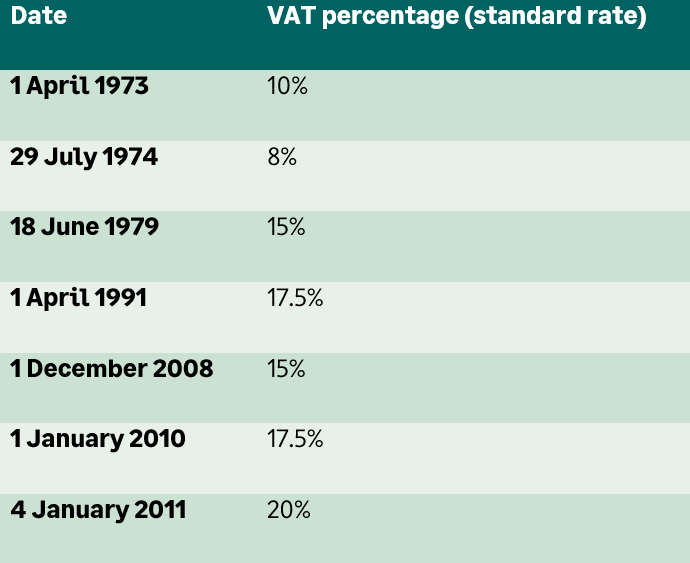
Here’s the historic standard VAT rates, starting with the introduction of VAT in 1973:

VAT rates

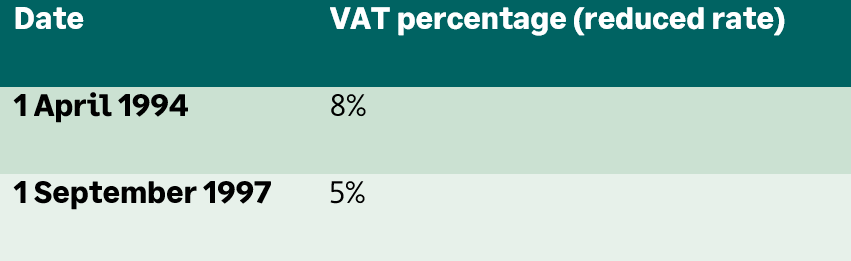
And here’s the historic VAT rates for the reduced rate, which is much more straightforward:

VAT rates

Who pays VAT?

VAT is paid by consumers on purchases they make from VAT-registered businesses. As such, it’s an end-user tax applied at the point of consumption.

When it comes to handing VAT to the government, that’s the responsibility of VAT-registered individuals and businesses.

They pay the VAT to the government after filing their monthly, quarterly or annual VAT Returns.

Until the deadline for payment, which is usually one month and seven days after the end of the VAT period, the business gets to hold on to the VAT money.

And there’s nothing wrong with putting it into a high interest account, or even using it to help with cash flow (e.g. effectively giving a short term loan to yourself).

You just have to make sure the money will be available when it’s needed to pay the VAT bill.

VAT is one of a small number of tax systems that turn businesses into unpaid tax collectors for the government.

However, the benefits of being able to claim back tax spent on purchases makes this worthwhile.

What is the UK VAT registration threshold?

Businesses with a VAT taxable turnover above a certain amount must, by law, register for VAT.

The exception to this is if the business only sells goods or services that are exempt from VAT.

The current VAT threshold is £90,000. If your turnover for which VAT applies goes over this, you are required to register for VAT.

The government says there are fundamentally two ways to measure if you’ve passed the threshold, or will do so soon.

Either can be true to require you to register for VAT:

  • You anticipate going over £90,000 in VAT taxable turnover in the next 30 days.
  • Your VAT taxable turnover was more than £90,000 over the past 12 months (a rolling 12 month period from today’s date, rather than a calendar year).

It can be difficult working out when you should register for VAT. Speaking to your accountant can help because they can help forecast your income for the coming period.

But what’s known as the VAT trap arises when a business finds itself crossing the VAT threshold, yet without having charged VAT to customers and without the required VAT accounting.

How to pay your VAT bill

When it comes to handing over the VAT payment to HMRC, you have several options.

Most businesses use direct debit.

This simplifies things significantly and means you needn’t think about it, other than ensuring the funds are available in the correct account at the right time.

However, if you want to keep more control over payments then other options are available, as follows.

But you must remember that some payment methods take up to three working days to be processed (including direct debits), and there might be surcharges too.

Making Tax Digital for VAT simplifies the whole procedure around collecting and reporting VAT by requiring the use of software. This makes it a cinch to know when payments are due. You can learn more about MTD by visiting our MTD hub.

Same day payments

  • Online (Faster Payments, CHAPS or via bank transfer using online banking)
  • Telephone (Faster Payments)

Up to three working days

  • Online (BACS or via debit or corporate credit card)
  • Direct debit
  • Standing order (only for Annual Accounting Scheme, or payments on account)
  • In person at your bank or building society

You may need to speak to your bank or building society ahead of time to see if they’re signed up to the Faster Payments system.

How to charge VAT

Charging VAT is pretty simple. You just add the relevant VAT percentage to your sale price, which the customer then pays.

For example, you charge the customer £12 for a widget that costs £10 and has VAT applied at the standard rate of 20% (i.e. £10 + 20% = £1.20).

There’s no legal requirement to list prices including VAT but not doing so might incur the wrath of the Advertising Standards Authority.

Because not including VAT in listed prices is so common, they include the requirement in their Committee of Advertising Practice guidelines.

However, if you mostly sell to other businesses, you might list prices without VAT provided this is clearly indicated.

If your customer is also VAT registered then you must provide a VAT invoice. This differs from standard or basic invoices because, by law, it needs to contain additional information.

For those using the basic VAT system, it should include the following:

  • A unique invoice number.
  • The time of the supply (that is, the goods or service you sell).
  • The date of issue of the document (required only if this is different to the time of supply).
  • Your name, address and VAT registration number.
  • The name and address of the person to whom the goods or services are being supplied.
  • A description sufficient to identify the goods or services supplied. Each description should list the quantity of the goods or the extent of the services, and the rate of VAT and the amount payable, excluding VAT.
  • The total amount payable, excluding VAT.
  • The rate of any cash discount offered.
  • The total amount of VAT chargeable, expressed in sterling.
  • The unit price.
  • The reason for any zero rate or exemption.

Understanding VAT terms and phrases

VAT has its own terminology, which can be very confusing. So here’s some simple definitions to help you get to grips with charging, reporting, invoicing and paying VAT.

Input VAT

The VAT you pay on purchases that you can subsequently claim.

Output VAT

The VAT you charge on sales.

VAT Return

The periodic tax returns you must submit to HMRC as part of your VAT obligations. Nowadays this must be done digitally, via software, as part of the Making Tax Digital for VAT rules. The VAT Return contains nine boxes that you fill in, as applicable.

VAT period

The period for which you calculate and then report VAT via a VAT Return. Typically this is quarterly (every three months), but it can be monthly or annually depending on the needs of your business.

If you’re unsure how to calculate VAT, visit the HMRC for expanded information.

Or if you have a simple calculation to do, you can make use of a VAT calculator.

Supplies

The goods and services you sell. For example, if you sell a widget to a consumer, then you have made a supply.

Inputs

The goods or services you buy to which VAT is applied by the seller.

Flat rate scheme

An alternative to calculating VAT where you instead apply a flat rate percentage to your total turnover. This makes things simplifier but could mean you end up handing over more VAT than you would otherwise.

Tax point

The date when the supply of goods or services is deemed to have taken place for the purposes of VAT accounting.

VAT invoice

An invoice that lists items such as the rate and amount of VAT, plus your VAT registration number. Supplying one each time isn’t a legal requirement but customers can request one, and any individual or business that’s VAT-registered should do so.

Threshold

The turnover amount for you or your business beyond which you’re legally required to register for VAT. Currently this is £90,000 and it applies only to the VATable goods or services you sell (this should be applied to total VATable turnover and not just profits). The threshold typically increases yearly.

Retail schemes

Several alternatives to calculating VAT that simplifies VAT accounting for retailers. Included is the point of sale scheme, which lets you more easily calculate VAT from your daily gross takings (DGT). It also includes two direct apportionment schemes, and two direct calculation schemes.

VAT registration number

The individual number that applies to your business and identifies it for VAT accounting purposes.

Distance selling

Before Brexit, sales to countries in the European Union (EU) were referred to as distance sales. Following Brexit, only sales from Northern Ireland to the EU are considered distance sales for UK businesses. Sales to EU countries from Great Britain and considered exports.

One Stop Shop

A scheme by which you can account for VAT in a single return when selling to consumers within EU countries.

Final thoughts: Getting to grips with VAT

VAT can be confusing but getting to grips with it takes only a little effort, and once you’ve learned what you need to know you can get on with your business just like thousands of others in the UK.

Don’t forget that seeking expert help is always a good idea.

Accountants and other tax experts work with VAT day in, day out. Speak to them if you’re struggling with any of the details, or how to implement VAT within your business.

Editor’s note: This article was first published in August 2017 and has been updated for relevance. 

Berita Terkini

Berita Terbaru

Daftar Terbaru

News

Berita Terbaru

Flash News

RuangJP

Pemilu

Berita Terkini

Prediksi Bola

Technology

Otomotif

Berita Terbaru

Teknologi

Berita terkini

Berita Pemilu

Berita Teknologi

Hiburan

master Slote

Berita Terkini

Pendidikan

Resep

Cek Ongkir Cargo

Togel Deposit Pulsa

Daftar Judi Slot Online Terpercaya

Slot yang lagi gacor

Un articolo del Giornale d’Italia del 1933 e una presunta pista per la soluzione del caso – STUDY CENTER for LEGALITY SECURITY and JUSTICE

Su “il Giornale d’Italia” dell’11 gennaio 1933 è stato rilevato un interessante articolo di stampa che documenta una circolare inviata dal Guardasigilli a tutti gli uffici dipendenti per cercare di reperire oggetti utili a rendere interessante il museo criminologico da poco inaugurato e che potrebbe essere rilevante per comprendere le ragioni di un eventuale “inganno” che si è celato dietro all’allestimento della Dama Bianca. Questa la trascrizione integrale dell’articolo.

«Il Museo criminale di Roma e la sua costituzione.

Il Guardasigilli ha diramato agli Uffici dipendenti una circolare per lo sviluppo delle raccolte del Museo criminale, aperto in Roma per tenere a disposizione degli studiosi quegli oggetti di particolare interesse che direttamente o indirettamente si riferiscono alla criminalità, cioè sia quelli che sono serviti alla perpetrazione dei reati, sia quelli che offrono la visione del processo di evoluzione dei nostri istituti penali e penitenziari. Il Museo che è in via di completamento, conserva per sua base una tripartizione: esecuzione del delitto, attività statale per l’accertamento del reato e per la condanna del reo, esecuzione delle pene e delle misure di sicurezza. La prima parte dovrà suddividersi in sezioni corrispondenti alle grandi categorie dei delitti, riattaccandosi possibilmente alla distinzione stabilita dal nuovo codice, di delitti commessi con violenza e delitti commessi con frode. La seconda parte dovrà riferirsi a quell’attività statale, che va dai sistemi di indagini della polizia giudiziaria alla ricerca delle prove in sede giudiziaria sino alla condanna. La terza parte sarà destinata a raccogliere tutto quanto interessa l’esecuzione penale, sotto due punti di vista e perciò in due sezioni distinte, l’una riguardante l’azione dello stato nel periodo dell’esecuzione penale, l’altra attinente agli effetti dell’esecuzione sulle persone dei condannati. Il ministro richiama in modo speciale l’attenzione sulla necessità che sia dato conveniente sviluppo alle raccolte che formano la seconda parte del Museo, la quale è intesa a illustrare particolarmente l’attività della magistratura. Pertanto il Ministro invita le autorità dipendenti a segnalare al Ministero quegli atti interrogatori, confronti, ispezioni, esperimenti, perizie, verbali d’udienza, sentenze ecc., che per la loro importanza eccezionale siano meritevoli di essere conservati nel Museo Criminale, allo scopo di offrire agli interessati la possibilità di esame e di studio. L’importanza dei documenti va determinata sia a riguardo del valore intrinseco di essi, sia in rapporto ai riflessi sociali e politici inerenti al procedimento al quale i documenti si riferiscono. Le segnalazioni dovranno essere accompagnate da una precisa descrizione…»

Tutto questo era davvero interessante ed era in grado di fornire alcune spiegazioni alla nostra leggendaria storia ed alle sue origini; una sorta di movente. La necessità di trovare oggetti utili per il museo potrebbe aver spinto proprio Umberto Biraghi, Medico e all’epoca personaggio molto vicino ai vertici del regime (gestiva a Roma una clinica ostetrica molto in voga tra i gerarchi romani), al “recupero” di uno scheletro nella zona di Poggio Catino, utilizzato poi per l’allestimento della Dama Bianca.

Del resto all’epoca del presunto ritrovamento, Umberto Biraghi era impegnato nella ristrutturazione nel paese sabino di un vecchio convento (trasformato in scuola di infanzia) che conteneva presumibilmente anche sepolture di frati ospitati dalla struttura. Non si può quindi escludere che il Medico avesse all’epoca la disponibilità di alcuni scheletri che oltretutto nessuno avrebbe reclamato in caso di scomparsa.

Berita Terkini

Berita Terbaru

Daftar Terbaru

News

Berita Terbaru

Flash News

RuangJP

Pemilu

Berita Terkini

Prediksi Bola

Technology

Otomotif

Berita Terbaru

Teknologi

Berita terkini

Berita Pemilu

Berita Teknologi

Hiburan

master Slote

Berita Terkini

Pendidikan

Resep

Cek Ongkir Cargo

Togel Deposit Pulsa

Daftar Judi Slot Online Terpercaya

Slot yang lagi gacor

Il mistero della Dama Bianca forse definitivamente chiarito? – STUDY CENTER for LEGALITY SECURITY and JUSTICE

Le iperstizioni sono “profezie autovverantisi”, cioè rappresentazioni della realtà, concezioni, credenze, interpretazioni, comportamenti e così via, il cui fondamento principale sono il marketing concettuale e la diffusione massiva attraverso i media digitali (definizione reperita su concetticontrastivi.org). Il termine è stato coniato da Nick Land, filosofo e scrittore britannico, padre dell’ “Accelerazionismo”, per definire delle notizie prive di alcun fondamento che però viaggiano nel tempo e assumono progressivamente sempre più credibilità. Per analizzare un caso di questo genere e per tentare di comprendere se la vicenda aveva un reale fondamento o se si trattava invece proprio di una sorta di “iperstizione” prodotta nel 1930 e che poi si è conservata e diffusa con successo (essendo funzionale a diversi contesti sociali, politici e culturali), abbiamo tentato di applicare un metodo scientifico, scomponendo il quadro informativo proposto da scritti e comunicazioni orali in diversi sottoelementi che sono stati poi verificati singolarmente. Il risultato della nostra analisi lascia però pochi spazi ai dubbi. Gli elementi salienti, costitutivi della leggenda della “Dama Bianca di Poggio Catino” e che poi si sono rilevati oggettivamente non veri, sono i seguenti:

  1. Lo scheletro contenuto in una cella all’interno del museo criminologico di Roma apparterrebbe a una donna uccisa in circostanze misteriose intorno alla fine del secolo XIV: notizia falsa (lo scheletro è di un uomo);
  2. Lo scheletro apparterrebbe a una persona uccisa all’inizio del secolo XVI: notizia falsa (da una osservazione esterna del reperto lo scheletro dovrebbe risalire alla seconda metà dell’800 e comunque in assenza di esame all’isotopo di carbonio ogni datazione è pura congettura attesa la mancanza di contestualizzazione del reperto al momento della scoperta);
  3. Al momento del ritrovamento di uno scheletro a Poggio Catino degli emissari del museo criminologico lo avrebbero prelevato insieme alle pareti della cella che è poi stata ri–assemblata nel museo: notizia falsa (la cella del museo che ospita lo scheletro è una ricostruzione in cartongesso); quindi nessuno smantellamento degli ambienti della fortificazione;
  4. Lo scheletro ritrovato a Poggio Catino avrebbe avuto mani e pieni legate da catene che sarebbero state portate al museo insieme ad altro materiale ritrovato nell’occasione: notizia falsa; i ceppi attualmente presenti intorno ai polsi dello scheletro nel museo sono dei mezzi di contenzione per le caviglie e attribuibili, apparentemente alla fine dell’800;
  5. Secondo Sergio Biraghi, nipote del proprietario del castello all’epoca del ritrovamento dello scheletro, il luogo dove sarebbe avvenuta la “macabra scoperta” sarebbe addossato a un muro, alla destra dell’ingresso alla parte alta della fortificazione e dove in passato c’era un torrione: notizia falsa (esperti di castelli, dopo accurati sopralluoghi, hanno escluso che nel punto indicato possa esserci stato un torrione poi crollato);
  6. Secondo Sergio Biraghi, al momento del ritrovamento dello scheletro della Dama Bianca sarebbe venuto alla luce anche un armigero, forse anch’egli detenuto in una cella attigua, che sarebbe poi stato seppellito in una tomba nel cimitero comunale di Poggio Catino: notizia falsa, da accurate indagini all’interno del cimitero comunale non ci sono tracce di tombe dell’epoca che potrebbero ospitare l’armigero.

In effetti avevamo avuto la sensazione fin dall’inizio che la storia della Dama Bianca fosse poco credibile per il semplice motivo che la ricostruzione della vicenda, così articolata, ricca di particolari, moventi, personaggi, dinamiche familiari ed economiche, fosse stata possibile semplicemente ritrovando uno scheletro senza nome.

Per non cadere nella trappola delle pseudo–scienze e delle conclusioni affrettate basate sull’intuizione e non sui risultati di un metodo scientifico, abbiamo affrontato il caso in maniera “avalutativa” escludendo progressivamente, come del resto suggerì Sir Arthur Conan Doyle, tutte le ipotesi impossibili per giungere a quella che probabilmente è la verità su questa intricata ed emozionante leggenda. Come sia stato possibile che una “fake new” come quella della Dama Bianca possa essere sopravvissuta nel tempo e anzi si sia amplificata, trovando addirittura spazio in opere letterarie e siti istituzionali ufficiali, è poi relativamente facile da comprendere.

La leggenda ha infatti tutti gli ingredienti per divenire appetibile e trasmissibile. È in grado di provocare emozioni forti, si riferisce a un terribile sopruso, riguarda una giovane e forse bella donna, si affacciano infine intricate questioni di tradimenti e infedeltà. “l’iperstizione” della Dama Bianca di Poggio Catino ha quindi visto, fin dal suo inizio negli Anni Trenta, una cospicua serie di “venditori di storie” e in seguito una pletora di creduloni che negli anni hanno tramandato la vicenda (in realtà mai avvenuta) attraverso scritti e pezzi giornalistici, arricchendola talvolta di ulteriori particolari fantasiosi ma privi di alcun riscontro. Su questo si è innestata poi con una certa facilità anche la superstizione del fantasma nel castello. Così facendo, in sostanza, hanno creato una leggenda che si è “storificata” nell’immaginario collettivo anche se priva di riscontri scientifici, documenti, materiali. In primis i responsabili e i gestori del museo Criminologico nel periodo fascista che pur certamente avendo contezza della montatura, hanno cavalcato la “ghiotta” leggenda della Dama Bianca, in grado, per sua natura, di stimolare impetuosi sentimenti popolari e di interessare morbosamente i visitatori. L’emozione che è in grado di generare il pensiero della fine orribile e ingiusta di una giovane donna è stata poi abilmente sfruttata e resa spettacolare negli anni per migliaia di ignari spettatori del museo criminologico di Roma. Poi, all’inizio del 2019, quando sono cominciate a giungere richieste sempre più insistenti da parte di studiosi insospettiti che avrebbero potuto far scoprire la messa in scena, i responsabili attuali del museo hanno tentato, forse per pudore, una ultima strenua resistenza a svelare ”l’inganno originale” dei loro colleghi del Ventennio, rendendo difficile l’accesso ai fascicoli ed ai documenti relativi all’installazione museale e non consentendo una osservazione “ravvicinata”, una ispezione accurata od analisi della presunta Dama Bianca. Ma questo non è stato sufficiente a non svelare tale inganno. E a questo punto un interrogativo sorge spontaneo. A chi appartiene lo scheletro maschile presente nel museo criminologico di Roma e sottratto per così tanti anni a pietosa sepoltura per soddisfare i pruriti macabri dei visitatori giunti da tutto il mondo? Noi abbiamo fatto la nostra parte per gettare luce nella vicenda della Dama Bianca. Lasciamo lo studio di questo ulteriore “case cold” all’iniziativa di altri solerti studiosi a cui auguriamo tutte le fortune.

Una cosa è però adesso certa: i suoni lunghi ed a volte inquietanti, simili a veri e propri ululati, che in alcune notti si sentono distintamente provenire dall’apice del castello e che turbano i sonni degli abitanti del centro storico di Poggio Catino, non sono le richieste di giustizia da parte del fantasma della Dama Bianca ma è il vento di scirocco, che forse da sempre a conoscenza dell’inganno, fa sentire beffardo le sue lunghe risate. Poggio Catino non ha comunque bisogno di fantasmi e leggende per manifestare la sua bellezza. Il suo fascino è nelle sue atmosfere antiche, nello spirito medievale che scaturisce da ogni pietra dei suoi vicoli, nei suoi panorami mozzafiato e negli sguardi saggi, consapevoli e sornioni dei suoi abitanti.

L’invito all’Amministrazione comunale di Poggio Catino di partecipare alle fasi finali della redazione della nostra ricerca non ha avuto risposta.

Berita Terkini

Berita Terbaru

Daftar Terbaru

News

Berita Terbaru

Flash News

RuangJP

Pemilu

Berita Terkini

Prediksi Bola

Technology

Otomotif

Berita Terbaru

Teknologi

Berita terkini

Berita Pemilu

Berita Teknologi

Hiburan

master Slote

Berita Terkini

Pendidikan

Resep

Cek Ongkir Cargo

Togel Deposit Pulsa

Daftar Judi Slot Online Terpercaya

Slot yang lagi gacor

Companies Using Gamification for Employee Engagement

Employment Hero’s research shows that job satisfaction could be better, with the average job satisfaction rating among employees being 6.4 out of 10. We know it’s not terrible, but it’s also not great. And we can all do better. 

The issue with a lack of satisfaction is that it leads to disengagement. It’s easy to spot employees who are quiet, going through the motions and doing the bare minimum. But for business owners and HR managers, knowing how to solve this problem is challenging. 

The old ways of motivating teams like the occasional team lunch and annual bonuses aren’t quite working the way they used to. This quiet quitting is a silent killer of productivity, innovation and morale. You need to wake your people up.

It’s time to move beyond outdated approaches and start communicating in a way that resonates with today’s workforce, through progress, achievement and recognition. While gamification for employee engagement is still gaining traction, forward-thinking companies are beginning to harness its power. They’re not just adding games to work; they’re reimagining how work can be more motivating, rewarding, and meaningful.

What is gamification?

Gamification is the strategic use of game-like elements to make everyday work more engaging and rewarding. This can include:

  • Points 
  • Badges
  • Leaderboards
  • Progress tracking

It’s not about playing games at work; it’s about tapping into the same human psychology that makes games so motivating. While it might sound like an obscure concept, by turning progress into something visible and achievement into something celebrated, gamification helps employees stay motivated, teams stay aligned and businesses build cultures that people genuinely want to be part of.

What is gamification in the workplace?

Gamification in the workplace is about transforming everyday tasks into meaningful, motivating experiences. The game mechanics brought into daily workflows are designed to spark engagement, drive performance and nurture a culture of growth and recognition.

For many businesses, success is measured by outcome, which can sometimes negatively impact motivation. Whereas companies using gamification for employee engagement foster a culture of celebrating progress. Imagine turning compliance training into a mission that earns rewards, or transforming sales targets into a friendly competition that fuels collaboration and achievement. It’s a simple yet powerful way to turn disengagement into energy, participation and real results.

How gamification can supercharge employee engagement

Companies using gamification for employee engagement tap into our core human drivers: the deep-seated desire for purpose, mastery, achievement and recognition. 

By creating clear goals, offering instant feedback on progress and celebrating every win, you turn work into a more satisfying experience. A well-designed gamification strategy can transform a disengaged workforce into a team of motivated players who are invested in their own success and the success of the business. The first step is often a simple employee engagement survey to see where you stand.

Real-life examples of gamification that works

Companies using gamification for employee engagement isn’t just folklore, it’s a strategy that businesses are already using. Tech giants, global sales organisations and innovative customer service teams are leveraging gamification to smash their goals. They are demonstrating that when you make work more engaging, you get better results. These businesses prove that gamification is a serious business tool, not a passing fad.

5 Powerful examples of gamification for employee engagement

This is your playbook of proven tactics. These examples can be adapted to almost any business to make an immediate impact on engagement. Here are five ways you can begin using gamification to supercharge employee engagement. 

  1. Onboarding quests

Turn the onboarding process into an adventure. New hires earn points and unlock badges for completing key tasks, such as:

  • Setting up their HR profile
  • Completing mandatory training
  • Meeting key team members. 

This makes the first few weeks more engaging and ensures critical steps aren’t missed.

  1. Learning leaderboards

Make training a competition. Award points for completing e-learning modules, with a live leaderboard showing who is leading the way. This encourages faster completion and higher retention of information.

  1. Wellness challenges

Create team-based wellness challenges where employees log activities like steps taken, minutes meditated, or healthy meals. Teams compete against each other, fostering both wellbeing and camaraderie.

  1. Idea submission badges

Encourage innovation by creating a system where employees submit ideas for business improvement. Award badges for “First Idea,” “Most Voted Idea,” or “Implemented Idea” to recognise and reward creative thinking.

  1. Digital “high fives”

Implement a peer-to-peer recognition system where employees can award points or digital “high fives” to colleagues who have helped them or demonstrated company values. This reinforces a culture of appreciation.

5 Smart examples of gamification for team building

A team that plays together, stays together. Gamification can be a powerful tool for strengthening the bonds between your employees. Here’s how: 

  1. Team sales competitions

Instead of individual leaderboards, create team-based sales contests. The entire team works towards a shared goal and everyone shares in the reward. This promotes collaboration over cut-throat competition.

  1. Virtual escape rooms

Use online escape room platforms that require a team to work together to solve puzzles and “escape” within a time limit. It’s a fun and effective way to improve communication and group problem-solving skills.

  1. Collaborative project milestones

For large projects, create a shared progress bar or “map” where the team unlocks the next stage by completing a collective set of tasks. This visualises shared progress and celebrates teamwork.

  1. “Guess Who?” team quizzes

Create quizzes based on fun facts submitted by team members. It’s a lighthearted way for people to learn more about their colleagues on a personal level, which is especially valuable for remote or hybrid teams.

  1. Cross-departmental challenges

Pit different departments against each other in a friendly competition, such as a charity fundraising drive or a creative challenge. This builds bridges across the organisation and breaks down silos.

5 Impactful examples of gamification for strengthening team culture

Culture isn’t what you write on the wall; it’s what you reward and celebrate every day. Gamification is a powerful way to bring your company values to life.

  1. Values-based recognition

Create a peer-to-peer recognition system where employees can award points specifically for actions that demonstrate a company value, such as:

  • Customer obsession points. 
  • Innovate and simplify badges.
  1. Culture quizzes

Regularly run short quizzes about the company’s history, mission and values. This reinforces cultural knowledge in a fun, low-pressure way.

  1. “Values Champion” leaderboard

Create a leaderboard that isn’t based on sales or performance, but on who has received the most values-based recognition points from their peers. This makes living the values a visible and celebrated act.

  1. Ethical dilemma simulations

For roles that require strong ethical judgment, create gamified scenarios where employees must make decisions based on company values and policies, earning points for choosing the correct course of action.

  1. On-the-spot rewards

Empower managers to award instant digital badges or points to employees they see living the company values in their day-to-day work. This reinforces desired behaviours in real-time.

The undeniable benefits of gamification for your business

It’s no secret, engaged teams don’t just work harder, smarter, stay longer and contribute more to business success. Gamification isn’t just a nice-to-have; it’s a proven way to drive measurable impact across your organisation. 

Companies using gamification for employee engagement often find they benefit from:

  • Higher productivity: Gamification can lead to a significant increase in employee productivity by providing clear goals and instant motivation.
  • Improved employee retention: Engaged employees are far less likely to leave. By making work more satisfying and rewarding, you reduce costly employee turnover.
  • Better knowledge absorption: Gamified training leads to higher engagement and better retention of information, resulting in a more skilled and knowledgeable workforce.
  • Stronger company culture: When you gamify your values and recognition, you build a stronger, more connected and more positive company culture.

The rules of the game: best practices for internal gamification

When it comes to gamification, design matters. A well-crafted experience can ignite motivation and connection. On the other hand, a poorly designed one can have the opposite effect. To create a game that truly engages your people, focus on these proven best practices.

  • Align with business goals: Every game must have a purpose. Don’t gamify for the sake of it. Tie every initiative to a clear business objective.
  • Keep it simple: The rules should be easy to understand in seconds. If it’s too complicated, people won’t participate.
  • Ensure fairness and inclusivity: The game should be winnable by everyone, not just your top performers. Ensure it’s accessible and fair to all roles and skill levels.
  • Celebrate participation, not just winning: Reward effort, progress and participation. Recognise people for trying, not just for coming in first place.
  • Get feedback and adapt: Your first version won’t be perfect. Launch a pilot, gather feedback from your employees and be prepared to tweak the rules.

How gamification connects your employees, your customers and your business

There is a powerful ripple effect that starts with your team and ends with your customers. Engaged employees create happy customers, which drives business growth.

As an example, when you use gamification to train your customer service team on product knowledge, they provide faster, more accurate service. Or when your sales team is motivated by a team-based competition, they collaborate to close more deals and drive more revenue. Gamification connects the dots between internal engagement and external success, turning your employee engagement into a profit centre.

How to design your first gamification initiative

Ready to bring gamification to life in your business? Here’s your quick-start guide to getting it right from day one.

  1. Identify a single problem: Don’t try to boil the ocean. Pick one clear, specific business problem to solve. (e.g., “New hires are taking too long to complete their onboarding training.”)
  2. Define success: How will you know if you’ve won? Define a clear, measurable outcome. (e.g., “Reduce average onboarding completion time from 4 weeks to 2 weeks.”)
  3. Choose simple mechanics: Start with the basics. A simple points-and-badges system is a great place to begin.
  4. Launch a pilot: Roll out your game to a small, controlled group first. Measure the results, get their feedback and refine the process before you launch it company-wide.

Common gamification pitfalls and how to avoid them

Like any powerful HR tool, gamification works best when it’s thoughtfully designed. When done well, it inspires collaboration, motivation and achievement, but when done poorly, it can create frustration or even disengagement. The key is to strike the right balance between fun and function, competition and collaboration, recognition and reward.

Before you roll out your own initiative, learn from the common mistakes businesses make and more importantly, how to avoid them… so your gamification strategy sets your people up for lasting success.

The Pitfall The Fix
Creating unhealthy, cut-throat competition that kills teamwork. Focus on team-based competitions or individual progress against a personal best, rather than just individual leaderboards.
Making the rules too complicated or the rewards uninspiring. Keep the rules simple. Offer rewards that people actually want, which might be non-monetary, like an extra day of leave or public recognition.
Only rewarding the top 1%. Create multiple ways to win. Reward improvement, consistency and participation, so everyone feels they have a chance to be recognised.

Embrace the future of employee engagement with Employment Hero

Future-proofing is essential for modern businesses, and companies using gamification for employee engagement are ahead of the curve. By transforming everyday tasks into meaningful, motivating experiences, you’re not just improving engagement, you’re building a culture of progress, recognition and shared success.

Disengagement doesn’t have to be your business reality. When employees can see their impact, celebrate their achievements and feel part of something bigger, everything changes; productivity rises, retention strengthens and your culture thrives.

But finding the time to focus on new initiatives can be challenging when you have a to-do list as long as your arm. This is where Employment Hero comes into play. Our Employment Operating System (OS) takes the traditional, isolated elements of employment and puts them into one place. Find and hire top talent, onboard, manage complex payroll, supercharge employee engagement and more. 

One system, everything employment.mployee lifecycle. Find and hire top talent, onboard, manage complex payroll, support compliance and more.

Berita Terkini

Berita Terbaru

Daftar Terbaru

News

Berita Terbaru

Flash News

RuangJP

Pemilu

Berita Terkini

Prediksi Bola

Technology

Otomotif

Berita Terbaru

Teknologi

Berita terkini

Berita Pemilu

Berita Teknologi

Hiburan

master Slote

Berita Terkini

Pendidikan

Resep

Cek Ongkir Cargo

Togel Deposit Pulsa

Daftar Judi Slot Online Terpercaya

Slot yang lagi gacor

The modern CFO in manufacturing and distribution: A guide

In manufacturing and distribution companies, the CFO faces mounting pressures.

These range from a spike in economic uncertainty, to ongoing supply chain disruptions, and a slew of new regulations in areas such as packaging, AI practice, and emissions reporting.

More than ever, companies need finance to adopt a more strategic role to help them navigate volatility and change.

This article delves into the challenges finance chiefs face in these sectors, and how they can develop their roles to overcome these obstacles.

Here’s what we discuss:

Boosting decision support

Finance leaders are increasingly expected to collaborate more widely with other business functions, such as operations and sales, to support decision-making.

But research by Sage shows manufacturing CFOs are underrepresented in this area.

They are less involved in operations (57%) than the average (67%). And fewer than average report significant involvement in strategy and collaboration with the C-suite or board.

Gemma Hogan is CEO at Hawkhurst Accounting and previously finance business partnering manager at Mercedes-AMG Petronas Formula One.

She says to build strategic influence, finance leaders need to develop curiosity about the needs of others across the organisation.

For example, at a previous company, the operations director was known for having little time for finance people.

“The team expected I’d struggle to build any partnership with him,” she says. “Early on, I needed to address the lack of a structured forecasting process, and noticed operations weren’t involved.

“Knowing they must have some version of forecasting to manage raw material scarcity and production bottlenecks, I walked over and asked how his team approached it.

“He looked surprised, then laughed and said: ‘Nobody from finance has ever asked me that.’

“I explained I didn’t want to redesign the wheel, just translate his team’s process into a financial view. He cleared his morning to show me everything.

“From then, that director regularly came to my desk to discuss business issues or invite me to meetings for a finance perspective.

A genuine interest in his world had turned scepticism into trust and built the foundation for true business partnering. Every department should feel that finance is their trusted adviser, not the final checkpoint.

gemma hogan, Ceo, hawkhurst accounting

The best teams develop this trust by turning commentary into actionable insight, using language that resonates beyond finance.

If you have a big enough team, you can even go further by embedding finance staff in operations and commercial teams to transform your engagement with them.

“Once finance is invited, and shows up, in planning meetings, production reviews, and sales discussions, it stops explaining results and starts influencing them,” adds Hogan. “If your finance team is only invited at the end of a process, something’s wrong.”

Keeping up with sector changes

Operating models in manufacturing and distribution are evolving rapidly.

For example, distributors are replacing traditional transactional approaches with value-adding strategies in delivery, supply chains and warehousing.

New tools and methods, such as AI, automated vehicles and Industrial Internet of Things (IIoT) devices, are helping them transform value chains and strengthen relationships with customers and suppliers.

As this transformation accelerates, the finance role is sometimes expanding faster than teams or systems can keep up with in small and medium-sized firms, says Hogan.

“They are expected to maintain control while also driving innovation, often with lean resources. In many SMEs, the finance director or CFO also now oversees information systems alongside finance; and, alongside operations, they need to understand developments in areas such as sales and supply chain technology.”

To tackle these challenges, agility and cross-functional understanding are essential. Finance leaders need to operate holistically, which requires strategic breadth and operational empathy.

Romesh Jeyaseelanayagam, founder of The FD Consultant and co-host of the Strive and Thrive podcast, says: “There is so much change in these sectors—for example, in robotics and artificial intelligence.

“It’s a big challenge for CFOs to keep up. To thrive, you have to keep abreast of changes, embrace them and help implement them effectively.”

He recommends developing change management skills so you can be more involved in implementing projects effectively: “People don’t like change, so you need the emotional intelligence to persuade and bring people on board. If they are contributing to the change, and using it as an opportunity to develop themselves, they are more likely to embrace and see the value in it.”

Integrating ERP systems

Modern enterprise resource planning (ERP) systems, such as Sage X3, can quickly and seamlessly integrate ecosystems linking warehouse management, e-commerce, and IIoT data into a real-time operational view.

“One of my team of finance directors has recently put in a warehouse management system (WMS) with a client,” says Jeyaseelanayagam. “They found a system that worked seamlessly with other programs such as their ERP.

“That enabled real-time operational data to flow into finance.

“For example, they can now validate invoices quickly because the system shows goods received immediately, rather than waiting for paperwork or confirmation from operations.”

That visibility enables us to quickly address problems, such as having too much or too little stock, and see opportunities.

Romesh Jeyaseelanayagam, founder, The FD Consultant

Hogan says real-time data is vital for modern manufacturing and having one version of that information in your ERP drives confident, aligned decision-making across departments.

A single source of truth allows finance, operations and supply chain management to work from the same foundation, eliminating the debate about whose numbers are right.

“With dashboards, the need for manual consolidation and spreadsheet work should be minimal,” she adds. “That shift enables you teams to spend more time interpreting performance rather than compiling it.

“However, not every business needs an all-in-one system. Forcing everything into a single ERP can create rigidity. Often, the best solution is a blend of tools, smartly integrated through APIs.

“Well implemented modern systems don’t just digitise. They enhance consistency, transparency, and control across the organisation.”

Integrated ERPs can also transform how a business operates through:

  • Mobile and remote access that gives teams visibility and control from anywhere.
  • Improved traceability and governance, reducing duplication and error through shared data structures.

Combining these benefits with genuine cross-functional collaboration enables CFOs to develop their role as a central coordinating hub, driving these all benefits for the business.

A 5-step action plan

As finance leaders ready themselves for these challenges, here are five ways to keep ahead.

  1. Develop your interest in operational needs and foster cross functional collaboration to enhance your strategic input. For example, aim to help identify new opportunities and improve efficiency in your supply chain.
  2. Reinforce your strategic acumen. Get invited to operational and leadership meetings, and show up with new ideas and genuine insights.
  3. Develop softer skills such as empathy, listening and emotional intelligence. You may be partnering with areas of the business, such as the factory floor or warehouse, with a different outlook to your own. Listen to and understand their needs and problems clearly before making any suggestions.
  4. Carefully identify which AI and automation projects will provide return on investment, then accelerate them. Sharpen your team’s data literacy skills so they can offer better strategic analysis.
  5. Adopt integrated systems such as ERP and warehouse management. Connect financial and operational workflows to increase line of sight across the business. Make informed decisions quickly with real-time data through integrated ERP dashboards. Modernise your systems with a cloud-native, integration-ready platform that can help your business scale with security and agility.

Final thoughts: Wider ecosystems can support your role

This article has examined the pivotal role CFOs in manufacturing and distribution can take in driving innovation and operational efficiency for their organisations.

It also underscores the crucial role integrated systems such as Sage X3 can play in this journey.

As well as using open APIs to allow seamless integration with other third-party software and hardware, Sage has expanded its ecosystem to support its worldwide partner community.

This enables partners of all sizes to work together to solve customers’ increasingly complex business problems.

With such powerful ecosystems behind them, finance leaders have vast opportunities to drive strategic growth and expand their influence. With the right skills and mindset, the prospects for adding value are bountiful.

Innovation in distribution

Download the white paper. Learn how to remain relevant and optimise operations in 2026 and beyond.

Get your copy now

Berita Terkini

Berita Terbaru

Daftar Terbaru

News

Berita Terbaru

Flash News

RuangJP

Pemilu

Berita Terkini

Prediksi Bola

Technology

Otomotif

Berita Terbaru

Teknologi

Berita terkini

Berita Pemilu

Berita Teknologi

Hiburan

master Slote

Berita Terkini

Pendidikan

Resep

Cek Ongkir Cargo

Togel Deposit Pulsa

Daftar Judi Slot Online Terpercaya

Slot yang lagi gacor

The circular economy in 2026 and beyond

The circular economy could be poised for rapid expansion with multiple trends set to boost the sector.

Manufacturers and distributors have been gradually increasing their use of these practices over the last few years. But experts agree there is huge potential to develop them further, supported by changes in the legal and business landscape.

This article looks at the main trends likely to impact the circular economy in manufacturing and distribution in 2026, and delves into how firms can take advantage of the opportunities.

Here’s what we discuss:

Economic benefits of the circular economy

Rather than the linear approach of making, using and discarding products, the circular model designs out waste and pollution by reusing, repairing, refurbishing, and recycling materials.

Business is increasingly recognising the benefits of circular practices.

Between 2023 and 2024, investment deal values in this sector grew 60%, according to BDO’s report Circular Economy Trends Report 2025.

The variety and maturity of business models attracting attention is also increasing, the report says.

With interest rates falling, investment in the circular economy could be set to accelerate further in 2026.

Research by research by UK charity WRAP and OC&C Strategy Consultants found that, since 2020, circular industries have grown 3.1% faster than linear industries, and circular-native businesses have grown up to twice as fast. The advantages include:

  • Cutting costs, for example, on raw materials, energy use and disposal.
  • Increasing competitive differentiation, and consumer and brand loyalty, by appealing to environmentally conscious customers, and increasing transparency and customer lifetime value.
  • Adding revenue streams with new types of products or services.

David Stewart, engineering director, research & innovation at the High Speed Sustainable Manufacturing Institute (HSSMI), says the economic opportunity of recovering an expensive asset is now the overwhelming driver of circular models:

“Where there is a good business case to repurpose, remanufacture, recondition or recycle, businesses have flourished and adoption will remain strong,” he says. “In the battery industry for example, there have been many new ventures over the past three years to remanufacture battery packs or recycle them back to basic materials to incorporate into new cells.”

Material scarcity: A fundamental circular economy driver

In many countries, the growing financial incentive is also driven by the fact that China controls much of the global supply and or processing power for many critical raw materials.

This includes:

  • Neodymium supply for electric motors.
  • Gallium supply for semi-conductors.
  • Nickel, manganese and cobalt refining and processing for batteries.

“Western continents like North America and Europe are largely at the mercy of Beijing’s controls on export of these materials,” adds Stewart. “Without enough domestic access, we rely on circular systems to collect, recover and consume these materials.”

To counter this, he predicts new recycling facilities for processing important materials, such as rare-earth elements, will launch across Europe.

Advanced sorting and dismantling technologies will also evolve to address the issue.

ERP and digital passports push adoption of the circular economy

In the UK, extended producer responsibility (EPR) legislation is set to drive more circular practice.

Previously, taxpayers footed the bill for the disposal and recycling of packaging.

But from FY26, producers pay a flat fee to help pay for these processes. From FY27, these payments will be based on recyclability, providing a huge incentive to make their packaging more circular.

In the UK, the government has established a Circular Economy Taskforce with a view to setting strategy in the near future. It is catching up with the EU, which already has multiple regulations promoting reuse and recycling.

One of the most important initiatives in 2026 will be phasing in digital product passports (DPP), starting with high environmental impact items such as batteries, textiles, electronics, and furniture.

For example, passports for many batteries will be required from February 2027.

A DPP is a scannable, dynamic profile that follows a product throughout its lifecycle, from raw material to resale. It reveals critical data such as material origins, manufacturing processes, energy use and emissions, durability, and repair or disposal options.

This will help firms track lifetime performance and improve reuse or recycling.

The EC is expected to produce a registry of passport requirements for specific product groups by mid-2026, with full deployment expected by 2030.

Innovation keeps pushing circular models

The transition to cloud-based systems will continue to drive circular economy adoption by supporting innovations such as remote condition monitoring, DPPs, and IIoT connections.

Increased storage access and processing power will drive new online platforms enabling product sharing, resale and refurbishment.

IIoT connectivity will continue to grow, allowing for timely maintenance and repairs. Building on this, predictive maintenance uses IIoT sensors combined with AI to track equipment and product conditions.

This enables intervention just before a failure occurs, extending product lifespan.

Digital twins take this even further by creating dynamic virtual models of physical items, updated with live data. For instance, a digital twin of a remote industrial pump can track use patterns, service history, and component wear after purchase to optimise the timing of repair, lengthening the product’s life.

The information can also inform product design, making products easier to disassemble, repair, and recycle—such as by minimising adhesives or incorporating modular components that are adaptable for reuse.

These are just a few of the many ways AI is expected to contribute to the circular value chain, with others ranging from hypersensitive sorting of materials in recycling to automated disassembly, predictive waste flow, and generative circular design.

Yet another innovation to watch is chemical processing techniques—such as pyrolysis, and photocatalytic and enzymatic recycling—which can convert plastic waste into valuable chemicals or fuels.

The obstacles remaining for circular economy adoption

Despite all these advancements, manufacturers will face many challenges in progressing circular practices in 2026.

Products are still not designed for circularity. For example, many batteries and devices are filled with glue, making them quick and easy to assemble but a nightmare to disassemble.

And manufacturers still face trade-offs with other business imperatives such as short-term revenue gain, speed to market, or lack of access to skills.

“Companies with new technologies and or tight budgets often focus on getting the product to market quickly, in volume and performing robustly,” says Stewart. “They don’t deny circular economics are important, they’re just too busy, and it becomes an afterthought. But it’s too late when you’ve already locked in the design. Manufacturers need to work more closely with designers to integrate disassembly options early in the process.”

Case study: Why refurbished phones are booming thanks to the circular economy

In Europe, Vodafone predicts refurbished mobile phones will grow from 309m in 2023, to 431m phones by 2027.

It’s part of a rapidly advancing global circular devices market that is set to exceed £150 billion by 2027, according to mobile operator organisation GSMA.

Steven Athwal, founder and CEO of The Big Phone Store, which has a strong focus on refurbished phones, says distributors and manufacturers are increasingly committing to refitting and reusing their products.

“Consumer demand for greener choices continues to grow, regulation is tightening, and customers are more inclined to enter the circular economy,” he says. “Scarcity of raw materials also makes refurbishment more financially appealing.”

Steven expects that tighter global rules on how e-waste is handled, reported and recycled—such as the UK Extended Producer Responsibility (EPR) scheme—will make manufacturers more accountable for product life cycles.

Governments could also increase rewards, such as tax incentives for refurbished goods. Or they could follow France’s lead in mandating the use of such goods—20% of IT devices bought by French organisations must be refurbished by law, with a target of 40% by 2040.

Steven also foresees more companies leasing so they can focus on reuse and reissue. And he predicts large companies will embed refurbishment into their business models, to gain control over their product life cycle.

However, as with other industries, phone manufacturers and distributors still face many challenges in product creation.

“Phones are designed to look great, but not to be opened, making them expensive and slow to fix,” he says. “We can overcome this with design standards that favour repairs and more research into modular parts. The other challenge is that customers are worried about warranties, software updates, safety, and the lifespan of refurbished devices. We have to promote quality control, extended warranties and transparent grading to gain their trust.”

Steven says a cultural shift is also needed for both companies and the public to move away from their obsession with new things.

A 5-step action plan for increasing circular practices

Here are some next steps for moving into the circular economy, or increasing your presence there:

  • Increasing the amount you recycle is a good start. But consider a more holistic strategy that embeds circular principles—such as durability, modular designs and swappable parts—at the core of your product design and service.
  • Promote a culture of long-term value. Think of every device as a long-term asset, not just a unit shipped. For example, consider generating value through leasing, repairs, and refurbishments.
  • Investigate the latest developments in IoT, predictive maintenance, and digital twin technology to support a more circular model.
  • Look at how AI is transforming production and distribution in areas such as real-time inventory monitoring and demand forecasting to reduce waste, or enhanced reverse logistics for more efficient returns and repairs.
  • Get deeper insights and visibility on your entire manufacturing operations to make better decisions about waste. Consider integrating your ERP, third-party logistics (3PL) and warehouse management for greater efficiency.

Final thoughts

The shift towards a circular economy continues, and is no less vital to business effectiveness and efficiency than it ever was. It is the ultimate secret trick that the C-suite needs to know about.

For CFOs, this means rethinking how value is created and captured through financial performance, long-term resilience, compliance, and brand integrity.

Sage X3 is a new era of ERP that provides the backbone for that kind of visibility and control.

It allows finance leaders to integrate sustainability metrics into the same system that manages costs, inventory, and profitability.

By connecting data across the value chain, CFOs can model the financial impact of circular initiatives, identify efficiencies, and make decisions grounded in both sustainability and solid business logic.

Unlocking value from the circular economy

Understand current and future trends—in 2026 and beyond. Get insights into the current state of circular manufacturing, and how firms can grasp opportunities.

Download now

Berita Terkini

Berita Terbaru

Daftar Terbaru

News

Berita Terbaru

Flash News

RuangJP

Pemilu

Berita Terkini

Prediksi Bola

Technology

Otomotif

Berita Terbaru

Teknologi

Berita terkini

Berita Pemilu

Berita Teknologi

Hiburan

master Slote

Berita Terkini

Pendidikan

Resep

Cek Ongkir Cargo

Togel Deposit Pulsa

Daftar Judi Slot Online Terpercaya

Slot yang lagi gacor

11 Tips for Setting Employee Expectations The Right Way

As a leader, your single most important job isn’t having all the answers. It’s making sure your team knows what’s expected of them. When you fail to set clear expectations, you’re not just creating confusion; you’re actively setting your people up to fail. And that’s a fast track to chaos, missed deadlines and a revolving door of talent.

Unspoken expectations are just premeditated disappointments. You have a picture in your head of what “good” looks like, but if you don’t share it, how can anyone else possibly see it? They’re left guessing, second-guessing and trying to read your mind. It’s exhausting for them and frustrating for you.

This is your playbook for getting it right. We’re going to show you how to swap vague instructions for crystal-clear outcomes, turn confusion into alignment and build a high-performing team that knows exactly how to win.

Why setting clear expectations isn’t just a task, it’s your job

Setting expectations is the absolute foundation of effective leadership. It’s not a box-ticking exercise you do once and forget about. It’s the daily work of building trust, eliminating guesswork and creating the psychological safety your team needs to do their best work.

Many leaders shy away from being direct because they confuse clarity with micromanagement. They’re not the same thing. 

Micromanagement is telling people how to do their job. Setting clear expectations is about defining ‘what success looks like’ and then empowering them to figure out ‘the how’. It’s the difference between being a centralised decision-maker and being a guide. By providing a clear destination, you give your team the freedom and autonomy to navigate the journey. That’s not control; it’s empowerment.

This fundamental leadership skill is the bedrock of high-performing teams, but its absence can create hidden costs that quietly drain your business. So, here are 11 tips on setting employee expectations the right way.

1. The hidden costs of unclear expectations

Vague expectations are a quiet drain on your business. They create friction, waste and frustration that slowly grinds your team to a halt. When people don’t know what’s expected of them, the damage is real and quantifiable.

You see it in the wasted hours spent on rework because the first attempt missed the mark. You feel it in the plummeting morale when people feel like they can never win, no matter how hard they try. You notice it when your most engaged employees start to pull back, stop offering ideas and do just enough to get by. And you definitely feel it when your most talented people walk out the door, tired of the constant guessing games.

This isn’t just a “people problem”, it’s a performance problem. It’s a recipe for chaos that directly impacts your bottom line. Getting clear on expectations isn’t just a nice-to-have; it’s a business necessity.

The first step to fixing this is to get brutally clear on what you actually want your team to achieve.

2. How to define what ‘done’ looks like

“Can you sort this out for me?” is not an expectation. It’s a hospital pass. Stop assuming people know what you mean by “done”. You need to move from delegating tasks to defining outcomes. It’s a subtle but powerful shift.

The best way to do this is by using the SMART framework. It’s a classic for a reason—it works. It forces you to get specific and create a shared, unambiguous picture of the end goal.

  • Specific: What exactly needs to be accomplished? Instead of “Improve our social media,” try “Increase our LinkedIn followers.”
  • Measurable: How will you know when it’s done? “Increase our LinkedIn followers by 15%.”
  • Achievable: Is this realistic given the resources and timeframe?
  • Relevant: How does this connect to the bigger picture? Does it support the team’s and the company’s goals?
  • Time-bound: When does this need to be completed? “Increase our LinkedIn followers by 15% by the end of Q3.”

Using this model eliminates ambiguity and ensures everyone is aiming for the same target. Once you know what ‘done’ looks like, you need to clarify who is responsible for getting it there.

3. End the confusion: Clarify roles with the RACI model

“I thought you were doing that!” is a phrase that should strike fear into any leader’s heart. It signals a complete breakdown in role clarity. The RACI model is a powerful, no-nonsense tool for making sure this never happens again.

It forces you to map out who does what, preventing tasks from being dropped and stopping people from stepping on each other’s toes. Here’s how it works:

  • Responsible: The person (or people) who actually does the work. They are the ‘doers’.
  • Accountable: The one person who is ultimately answerable for the work getting done correctly. This is the owner and there can only be one.
  • Consulted: The experts who need to provide input or feedback before the work is done. This is a two-way conversation.
  • Informed: The stakeholders who need to be kept up-to-date on progress but don’t need to be directly involved. This is a one-way communication.

Mapping this out for every major project or initiative is a game-changer. It provides a single source of truth for who is involved and in what capacity, bringing order to potential chaos.

Knowing what needs to be done and who needs to do it is crucial, but it’s not enough to inspire great work.

4. The power of ‘why’: Communicating purpose, not just tasks

Two people, a woman and a man, are working together, discussing something on a laptop. The background features a dark wall with illuminated diagrams.

People don’t pour their hearts into a to-do list. They pour their hearts into a mission. If you want your team to be truly motivated, you need to connect their work to a bigger purpose. Explain the ‘why’ behind the ‘what’.

Instead of just saying, “We need to hit our sales target,” explain why it matters. “Hitting our sales target this quarter means we can invest in the new product feature our customers have been asking for, which will help us serve them better.”

This simple shift in communication transforms a mundane task into a meaningful contribution. It helps your team see how their individual effort fits into the company’s goals and the value you provide to your customers. A sense of purpose is the ultimate performance-enhancing drug. It’s a core component of building a great company culture and demonstrating empathetic, effective leadership.

With the ‘why’ established, the timing of your conversation becomes critical.

5. Set expectations early to prevent chaos later

The best time to set expectations is right at the very start. The worst time is when a project is already off the rails. Being proactive here will save you a world of pain.

For any new project, role or initiative, your first step should be a dedicated kick-off meeting to establish alignment. Get everyone in a room (virtual or physical) and agree on the goals, roles (using RACI), timeline and what ‘done’ looks like.

This proactive approach prevents the massive waste of time, energy and morale that comes from having to course correct midway through a project. An hour spent on alignment at the beginning can save you weeks of rework and frustration later.

As you set these expectations, it’s also vital to consider the people who will be delivering on them.

6. How to align expectations with your team’s strengths

Great leaders don’t try to force a square peg into a round hole. They understand the unique talents of each person on their team and set expectations that play to those strengths.

Take the time to understand what each team member excels at and what they enjoy doing. Is one person a brilliant problem-solver but a less effective communicator? Assign them the complex technical task, not the client presentation. Is another a natural relationship-builder? Give them the responsibility of managing stakeholder communications.

When you assign tasks that leverage individual strengths, you get two massive benefits: better results and higher engagement. People are more motivated and effective when they are doing work they are good at and find rewarding.

Setting expectations is just the beginning; the real work happens in the follow-up.

7. The importance of check-ins and non-stop feedback

Setting expectations is not a “set it and forget it” activity. It’s a continuous conversation. You don’t just point the ship in a direction and hope for the best; you need to keep steering.

Regular, informal check-ins are your steering mechanism. They are crucial for reinforcing expectations, providing real-time coaching and clearing roadblocks before they become major crises. A quick, “How are you getting on with that report? Is anything unclear?” can prevent a small misunderstanding from derailing a whole week’s work.

This creates a continuous feedback loop that keeps everyone aligned and moving in the right direction. It’s not about checking up on people; it’s about checking in with them to offer support.

This culture of open dialogue should also flow in the other direction.

8. How to build a culture where people can challenge expectations

Your team on the ground often has a better view of the reality of a project than you do from a distance. Creating a culture of psychological safety, where employees feel comfortable questioning or pushing back on unrealistic expectations, is a sign of a healthy, confident team.

If a team member can say, “I understand the goal, but given our current workload, that deadline isn’t realistic,” it’s not insubordination—it’s valuable data. It gives you a chance to re-evaluate and create a better, more achievable plan. This collaborative approach prevents burnout and leads to far more successful outcomes than a top-down command-and-control style.

To support these conversations, verbal agreements aren’t enough.

9. If it’s not in writing, it doesn’t exist: Document your expectations

Human memory is notoriously unreliable. A verbal agreement made in a busy hallway is not a solid foundation for a critical project. If it’s important, write it down.

Documenting key expectations in a shared, accessible place is non-negotiable. Whether it’s in a project management tool like Asana or Trello, a follow-up email after a meeting or a formal project brief, you need a single source of truth.

This simple act eliminates the “I thought you meant…” arguments. When there’s a disagreement, you can both refer back to the written record. It holds everyone accountable, including you. Smart employee management software can provide a central place for this.

With everything documented, you can then focus on tracking your progress.

10. How to measure success and celebrate wins

What gets measured gets managed. You can’t know if you’re winning if you don’t keep score. It’s essential to track progress against the specific, measurable outcomes you defined with the SMART framework.

But tracking isn’t just about spotting problems. It’s also about celebrating progress. When your team hits a key milestone, acknowledge it. When they achieve the final goal, celebrate it. Recognition is the fuel that keeps a high-performing team going. A simple “great work on this” in a team meeting or a company-wide shout-out can have a huge impact on morale and motivation.

Even after the project is complete, there’s one final step to ensure you keep getting better.

11. Lessons learned: The power of the post-project debrief

A man in a mustard sweater writes on a flip chart during a team meeting in a modern office with a chalkboard wall. Colleagues watch attentively.

The project is done, the champagne has been popped, but the learning has just begun. One of the most valuable things you can do is conduct a “lessons learned” session or a project retrospective.

This is a blame-free review to identify what went well, what didn’t and how the process of setting and managing expectations can be improved next time. Ask questions like:

  • Were the initial goals clear?
  • Did everyone understand their roles?
  • Did we communicate effectively?
  • What roadblocks did we hit and how could we have anticipated them?

This transforms every project, successful or not, into a learning opportunity, making your team smarter, stronger and more aligned for the next challenge.

Setting clear expectations is the art and science of great leadership. By implementing these strategies, you can build a culture of clarity, trust and high performance.

Ready to raise the bar on every project?

Empower your team with the tools and insights they need to succeed. Employment Hero’s employee management solutions help you set clear goals, track performance in real time and provide meaningful feedback that drives growth. 

From onboarding new hires to managing ongoing development, our platform makes it easy to keep everyone aligned, accountable, and motivated. By turning clarity into action, you can build a more engaged, productive workforce and ensure every project delivers its full potential. x

Discover how Employment Hero can transform the way your team works and help you achieve better results, every time.

Berita Terkini

Berita Terbaru

Daftar Terbaru

News

Berita Terbaru

Flash News

RuangJP

Pemilu

Berita Terkini

Prediksi Bola

Technology

Otomotif

Berita Terbaru

Teknologi

Berita terkini

Berita Pemilu

Berita Teknologi

Hiburan

master Slote

Berita Terkini

Pendidikan

Resep

Cek Ongkir Cargo

Togel Deposit Pulsa

Daftar Judi Slot Online Terpercaya

Slot yang lagi gacor